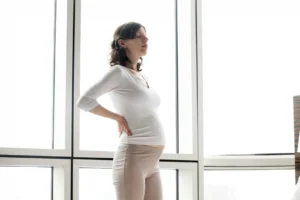
Living with a slipped disc can make getting a good night’s sleep difficult. The wrong sleeping position can increase pressure on the spine, worsen nerve compression, and leave you waking up with more pain and stiffness than before.
The good news is that choosing the right Slip Disc Sleeping Positions can help reduce spinal stress, ease discomfort, and improve your overall recovery. Small changes in your sleeping posture can make a noticeable difference in how you feel each morning.
In this complete guide, we’ll cover the Top 10 Slip Disc Sleeping Positions, explain why they work, what positions to avoid, and share expert tips to help you sleep more comfortably and support your spine’s natural healing process.
Understand Slip Disc and Why Sleeping Positions Matter
A slipped disc, medically known as a herniated or prolapsed disc, occurs when the soft inner material of a spinal disc pushes through its outer layer and compresses nearby nerves. This can cause back or neck pain, numbness, tingling, and weakness that may radiate into the arms or legs.
Your sleeping position plays a crucial role because the spine remains in the same posture for 6–8 hours each night. Poor sleeping positions can increase pressure on the affected disc and nerves, while the right Slip Disc Sleeping Positions help maintain spinal alignment, reduce nerve irritation, and support a more comfortable recovery.
How Does a Slip Disc Affect Your Sleep?
Slip disc disrupts sleep through several overlapping mechanisms:
- Positional nerve compression — lying flat or in certain positions increases posterior disc pressure, worsening nerve root contact
- Muscle spasm — surrounding paraspinal muscles contract protectively during the day and remain tense during sleep without active decompression positioning
- Inflammatory cycle — disc inflammation peaks in early morning hours when patients have been lying still, which is why 3-5 am pain is extremely common
- Nociceptive sensitisation — prolonged nerve compression creates central sensitisation, amplifying pain perception even from low-grade stimuli during sleep
Understanding these mechanisms helps you appreciate why specific slip disc sleeping positions are not arbitrary suggestions — they are biomechanically targeted to address each of these factors.
Best 10 Sleeping Positions for a Slip Disc
Position 1 — Side Sleeping With a Pillow Between the Knees
Side sleeping is the most commonly recommended position for slip disc patients, and for good reason — it naturally reduces lumbar lordosis and takes pressure off the posterior disc space where most herniations occur.
Why It Helps:
- Reduces torsional stress on the lumbar spine by preventing pelvic rotation
- Keeps the spine in a neutral horizontal alignment throughout the night
How to Do It:
- Lie on your less painful side with both knees slightly bent
- Place a firm pillow between your knees — not just the lower knee — to prevent the upper hip from rotating downward
- Keep your head supported by a pillow that maintains cervical neutrality
Additional tip: If your shoulder becomes uncomfortable, place a small rolled towel under the waist gap between your ribcage and the mattress.
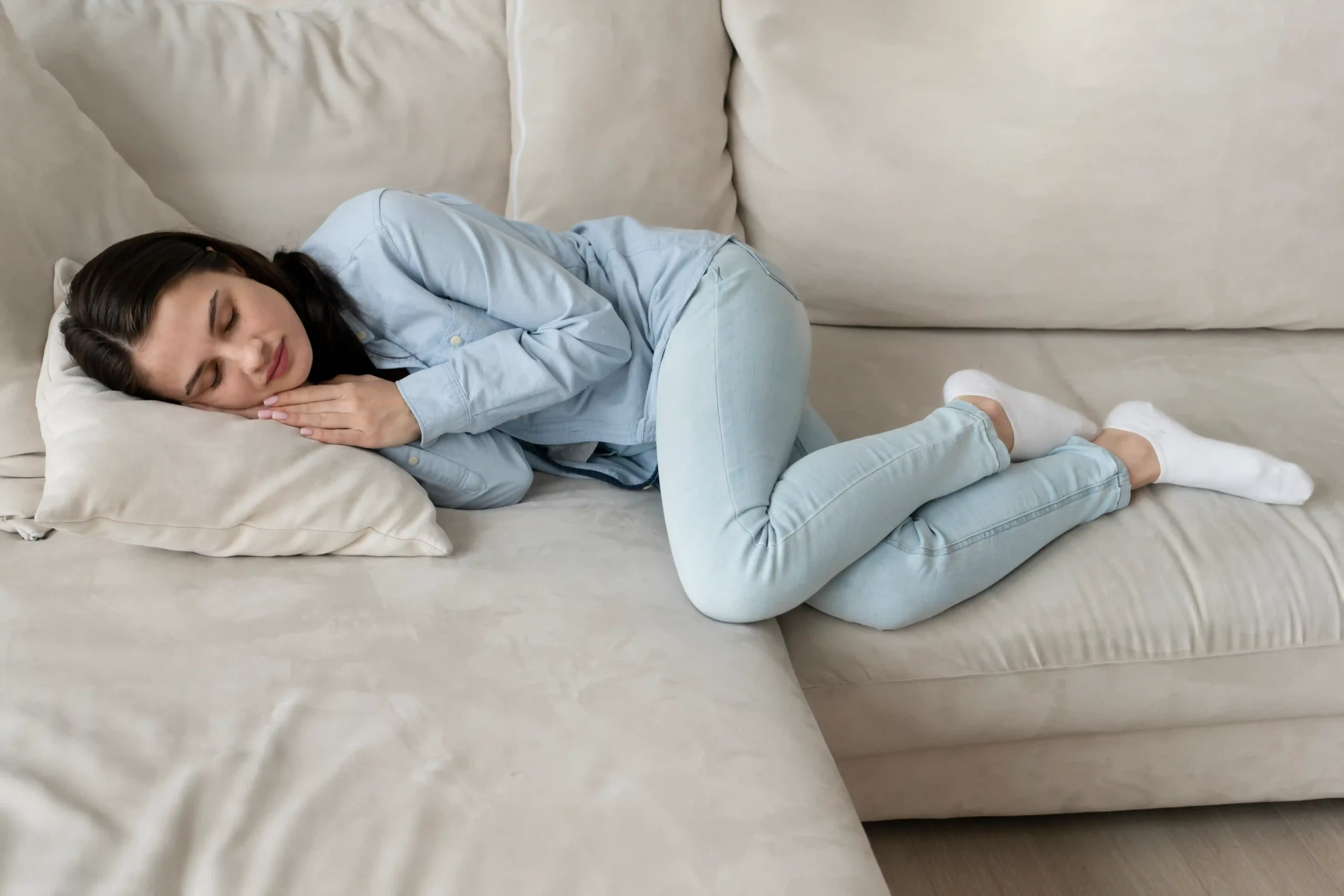
Position 2 — Foetal Position (Curled Side Lying)
The foetal position gently opens the posterior intervertebral space — the exact area where most lumbar disc herniations compress nerve roots — making it one of the most effective slip disc sleeping positions for immediate pain relief.
Why It Helps:
- Opens facet joints and posterior disc space, directly reducing nerve root pressure
- Particularly effective for L4-L5 and L5-S1 herniations, which respond to flexion
How to Do It:
- Lie on your side and curl your knees gently toward your chest
- Do not curl so tightly that your lower back rounds excessively — a moderate curl is optimal
- Place a pillow between the knees to maintain pelvic alignment
Additional tip: Switch sides midway through the night if one side becomes painful — alternating reduces cumulative pressure on either hip.
Position 3 — Back Sleeping With a Pillow Under the Knees
Lying on your back with knee elevation is biomechanically ideal for patients with posterior disc herniations — it flattens lumbar lordosis and distributes body weight evenly across the spinal column.
Why It Helps:
- Reduces intradiscal pressure at the lumbar levels by flattening the curve
- Eliminates concentrated load on any single nerve root contact zone
How to Do It:
- Lie flat on your back on a medium-firm surface
- Place a firm pillow or rolled blanket under both knees — creating approximately 30 degrees of knee flexion
- Keep a low-profile pillow under your head to maintain cervical neutrality
Additional tip: A lumbar roll (a small cylindrical pillow) placed under the small of your back can further support the natural curve for patients who find flat-back positioning uncomfortable.
Position 4 — Reclined Position (Inclined Back Sleeping)
For patients with lumbar spinal stenosis or spondylolisthesis causing disc-related pain, sleeping in a slightly reclined position reduces anterior shear forces on the lumbar segments.
Why It Helps:
- Anterior tilt of the pelvis reduces in reclined positions, decreasing compression on posterior elements
- Gravity-assisted spinal decompression in the semi-reclined position reduces nerve pressure
How to Do It:
- Use an adjustable bed set to 15-30 degrees incline, or stack two firm wedge pillows behind the back
- Support the knees with a pillow in the inclined position to complete the spinal decompression effect
- Avoid full upright sleeping — the compressive force increases beyond 45 degrees
Additional tip: An adjustable bed frame is worth the investment for patients with chronic disc disease who have not found relief in flat positions.
Position 5 — Side Sleeping on the Affected Side (Specific Cases)
Counterintuitively, some patients find temporary relief sleeping on the affected side, because this position slightly opens the contralateral neural foramen — the bony tunnel through which the affected nerve exits the spine.
Why It Helps:
- Opens the nerve exit channel on the compressed side in some disc herniation patterns
- Reduces piriformis tension that can contribute to sciatic nerve irritation when sleeping on the unaffected side
How to Do It:
- Lie on the side of your pain with the affected leg straight and the upper leg bent slightly
- Place a pillow under the upper knee to prevent it from pressing down and rotating the pelvis
- Try this position for 20-30 minutes to assess whether it reduces or increases symptoms
Additional tip: This position does not suit all herniation patterns — if it increases pain, discontinue immediately and return to contralateral side sleeping.
Position 6 — Prone Sleeping With Pillow Under the Stomach
Stomach sleeping is generally discouraged for slip disc, but a modified prone position with abdominal pillow support can benefit specific disc herniation patterns — particularly those that respond to extension.
Why It Helps:
- Extension-based positions reduce posterior disc protrusion in some herniation types (McKenzie extension responders)
- Abdominal pillow support reduces lumbar hyperextension that would otherwise occur in an unsupported prone position
How to Do It:
- Lie face down with a firm pillow placed under the lower abdomen and pelvis — not the chest
- Keep the neck in neutral — face down with a flat pillow or face to the side with cervical support
- Start with 15-20 minutes to assess whether extension relief is present
Additional tip: If you wake with increased leg pain, stiffness, or numbness in this position, extension is not your directional preference — switch back to flexion-based positions.
Position 7 — Back Sleeping With Towel Roll Under the Lumbar Curve
For patients who find a flat back position uncomfortable because of a pronounced lumbar curve, a lumbar support roll bridges the gap between the mattress and the natural spinal curve.
Why It Helps:
- Supports the lumbar lordosis without creating hyperextension
- Reduces paraspinal muscle activation needed to maintain lumbar position during sleep
How to Do It:
- Roll a standard bath towel to approximately 3-4 inches in diameter
- Place it at waist level — not mid-back or lower back — when lying flat
- Combine with a knee pillow for complete lumbar support
Additional tip: The ideal towel roll diameter varies by individual lumbar curve depth — experiment with different thicknesses over 2-3 nights.
Position 8 — Log Position (Straight Side Sleeping)
A straight side-lying position — without the foetal curl — maintains lumbar neutrality while keeping the spine elongated, which reduces disc compression.
Why It Helps:
- Prevents flexion-related posterior disc pressure while avoiding the torsional stress of back sleeping
- Suitable for patients where both flexion and extension aggravate symptoms
How to Do It:
- Lie on your side with a straight body alignment — do not curl or arch
- Use a contoured body pillow along the full length of the body to support this neutral alignment
- Ensure the pillow between the knees maintains pelvic level
Additional tip: A full-length body pillow significantly simplifies maintaining straight side alignment throughout the night.
Position 9 — Supported Supine With Cervical Slip Disc
For patients with cervical (neck) disc herniation specifically, back sleeping with appropriate cervical support is the highest-priority sleep modification.
Why It Helps:
- Cervical herniation patients aggravate arm symptoms with lateral neck flexion in side sleeping
- Supported supine maintains cervical neutrality and reduces foraminal nerve compression in the neck
How to Do It:
- Use a cervical contour pillow — a pillow with a raised edge for the neck and a lower profile for the occiput
- Keep the head centred — do not allow the head to rotate to either side while supine
- Avoid thick pillows that push the neck into flexion
Additional tip: Water-filled cervical pillows allow adjustable firmness and cervical support height — highly recommended for cervical disc patients.
Position 10 — Alternating Positions Through the Night
No single position should be maintained for an entire 6-8-hour sleep period. Positional rotation — changing position every 1-2 hours — prevents cumulative load buildup on any single spinal segment.
Why It Helps:
- Prevents sustained static loading on the disc and nerve root from a single position
- Promotes spinal fluid movement and disc nutrition through positional variation
How to Do It:
- Set a low-volume alarm at 1-2-hour intervals for the first few weeks of slip disc management
- Rotate between side sleeping, back sleeping with a knee pillow, and — where tolerated — modified prone positions
- Keep slip disc sleeping position aids (knee pillows, towel rolls) within reach of the bed
Additional tip: Most patients naturally rotate positions during sleep — the goal is simply to ensure none of the positions used are biomechanically harmful.
What to Avoid When Sleeping with a Slipped Disc
Certain positions and habits consistently aggravate slip disc symptoms overnight:
- Stomach sleeping without abdominal support — hyperextends the lumbar spine and compresses posterior neural elements
- Sleeping on a sagging or overly soft mattress — eliminates spinal support and increases disc compression asymmetrically
- Thick pillows that elevate the head excessively — create cervical flexion that worsens cervical disc symptoms and upper limb pain
- Twisting to reach the bedside — rotational stress during a half-awake state is one of the most common acute pain triggers
- Sleeping on a couch or recliner armchair — a non-neutral spinal position for hours causes significant next-morning stiffness
Other Beneficial Tips for People With Slip Disc
- Choose a medium-firm mattress — consistently outperforms both soft and extra-firm surfaces for back pain and disc conditions in clinical research
- Apply heat before sleeping — 15-20 minutes of warm compress on the lower back before bed relaxes paraspinal musculature and reduces overnight spasm
- Gentle stretching before sleep — cat-cow stretch, knee-to-chest stretch, and pelvic tilts- reduces disc pressure and releases muscle tension accumulated during the day
- Sleep hygiene for pain — consistent sleep schedule, cool room temperature, and darkness all reduce cortisol-driven pain sensitisation
- Anti-inflammatory evening meal — reducing processed food and excess sugar at dinner reduces inflammatory mediator production that peaks early morning
When Sleep Trouble Signals a Bigger Problem
Most slip disc-related sleep difficulty improves gradually with Physiotherapy and position optimisation. However, these symptoms during or after sleep require urgent medical evaluation:
- Loss of bladder or bowel control alongside back or leg pain — possible Cauda Equina Syndrome requiring emergency surgical intervention
- Bilateral leg numbness or weakness — suggests central canal compression
- Pain that is exclusively worse at rest and night without positional variation — raises the possibility of spinal infection, malignancy, or inflammatory spondyloarthropathy rather than mechanical disc disease
- Progressive weakness — foot drop or grip weakness that has worsened over 2-4 weeks indicates active nerve damage
- Fever alongside back pain — possible discitis or epidural abscess
Get Quick Relief from Slip Disc Tonight
While optimal slip disc sleeping positions reduce overnight pain, combining positional therapy with these immediate relief strategies accelerates results:
- Ice the affected area for 15 minutes before bed during the acute phase (first 48-72 hours)
- Switch to heat after the acute phase — moist heat penetrates deeper than dry heat and reduces muscle spasm more effectively
- Take prescribed anti-inflammatory medication as directed — timing the dose to match your highest pain window (often 3-5 am)
- Place your phone on the opposite side of the bed to prevent neck rotation when reaching for it overnight
When to See a Doctor for Slip Disc Sleep Problems
Consult a spine specialist when:
- Sleep disruption from disc pain has persisted beyond 4-6 weeks without improvement
- Pain is severe enough to prevent any sustained sleep despite positional modifications
- Neurological symptoms — weakness, progressive numbness, loss of reflexes — are present
- Over-the-counter pain management is inadequate to allow functional daily activity
Frequently Asked Questions
1. How should I sleep if I have a slipped disc?
The best Slip Disc Sleeping Positions include sleeping on your side with a pillow between your knees, on your back with a pillow under your knees, or in a gentle fetal position. These positions reduce pressure on the spine and help relieve nerve irritation.
2. How to heal a slipped disc quickly?
Recovery is supported by proper sleeping positions, physiotherapy, prescribed medications, and avoiding activities that strain the spine. Most patients improve significantly within 6–12 weeks with conservative treatment.
3. Why does a slipped disc get worse at night?
Pain often feels worse at night because the spine stays in one position for hours, increasing pressure on the affected disc and surrounding nerves.
4. How long until a slipped disc heals?
Most slipped discs improve within 6–12 weeks, while complete healing may take 6–12 months, depending on the severity and treatment plan.
5. What worsens a slipped disc?
Poor posture, prolonged sitting, heavy lifting, twisting movements, sleeping on an unsupportive mattress, and avoiding physical activity can worsen symptoms and delay recovery.
Conclusion
Following the right Slip Disc Sleeping Positions can reduce spinal pressure, improve sleep quality, and support a faster recovery. Combined with physiotherapy, proper posture, and medical care, these simple changes can make a significant difference in managing slip disc pain.
If your symptoms are constant or worsen despite these measures, seek medical evaluation to determine the most appropriate treatment.
Dr. Amit Shridhar — Best Spine Surgeon in Delhi provides expert diagnosis and personalized treatment for slip disc and other spinal conditions, offering both advanced non-surgical care and minimally invasive surgical options when needed.