
If you have been dealing with constant back pain that shoots down your leg, or neck pain that causes a tingling in your arm, you may have already heard the term slip disc. It is one of the most common spine conditions in the world, yet most people do not fully understand what it means, what causes it, or what they can do about it.
This complete guide explains everything you need to know — in simple language — without unnecessary medical jargon. Whether you were just diagnosed or simply want to understand your back pain better, this is the right place to start.

Table of Contents
What is a Slip Disc?
A slip disc — also called a herniated disc, prolapsed disc, or ruptured disc — happens when one of the cushion-like pads between the bones of your spine shifts out of its normal position.
Your spine is made up of 33 bones (vertebrae) stacked on top of each other. Between each bone sits a rubbery disc that acts like a shock absorber. Each disc has two parts:
- A tough outer ring (annulus fibrosus) that holds everything in place
- A soft, gel-like centre (nucleus pulposus) that absorbs pressure
When that tough outer ring weakens, tears, or cracks — the soft gel inside pushes out. That is what we call a slip disc. When this gel presses on nearby nerves, it causes pain, numbness, or weakness — sometimes in areas that seem far away from your back, like your leg or foot.
Types of Slip Disc — What Stage Are You At?
Not every slip disc looks the same. Doctors classify them into four stages based on how far the disc has moved:
| Type | What It Means |
| Disc Bulge | The outer ring weakens, and the disc swells outward but stays intact |
| Disc Protrusion | The gel pushes through a weak point, but the outer ring still covers it |
| Disc Extrusion | The gel breaks through the outer ring and leaks out |
| Disc Sequestration | A piece of the gel completely breaks off and moves into the spinal canal |
Understanding which type you have helps your doctor decide the right treatment — from physiotherapy for early stages to surgery in more advanced cases.
Symptoms of Slip Disc — What Does It Feel Like?
Symptoms are mainly dependent on which part of your spine is affected and whether the disc is pressing on a nerve.
Slip Disc in the Lower Back (Lumbar)
The lower back is where most slip disc cases occur. Common symptoms include:
- Sharp or burning pain in the lower back that can travel down one leg (this is called sciatica)
- Numbness or tingling in the thigh, calf, or foot
Slip Disc in the Neck (Cervical)
- Pain in the neck that travels into the shoulder, arm, or hand
- Tingling, numbness, or weakness in the fingers or arm
Warning Signs — Seek Help Immediately
Some symptoms mean you need to see a doctor right away:
- Loss of bladder or bowel control
- Severe weakness in both legs or numbness in the inner thighs
These could indicate Cauda Equina Syndrome — a rare but serious condition that requires emergency treatment.
Causes of Slip Disc — Why Does It Happen?
A slip disc does not usually happen because of one dramatic event. In most cases, it develops gradually due to:
1. Age-Related Disc Degeneration As you get older, spinal discs naturally lose water content and flexibility — making them more likely to crack or rupture even from minor movements.
2. Poor Posture and Prolonged Sitting Sitting for long hours hunched over a desk or phone puts constant, repeated pressure on the discs — gradually weakening the outer ring over time.
3. Heavy or Improper Lifting Lifting heavy objects with your back instead of your legs places intense pressure on lumbar discs and can trigger a slip disc — especially in people whose discs are already worn.
Risk Factors of Slip Disc
You are more likely to develop a slip disc if:
- You are between 30 and 50 years old (peak age for disc problems)
- Your job involves heavy lifting, bending, or twisting repeatedly
- You spend long hours sitting — at a desk, in a vehicle, or working from home
- You are overweight — extra body weight puts more pressure on lumbar discs
- You smoke — smoking reduces oxygen supply to discs, making them degenerate faster
- You live a sedentary lifestyle with weak core muscles
- You have a family history of disc disease
How Are Slipped Discs Diagnosed?
If you visit a spine specialist with symptoms of a slip disc, they will typically follow these steps:
Step 1 — Physical Examination
Your doctor will check your reflexes, muscle strength, and sensation. They may ask you to walk, bend, or raise your leg while lying down (the Straight Leg Raise test — a classic sign of lumbar disc herniation).
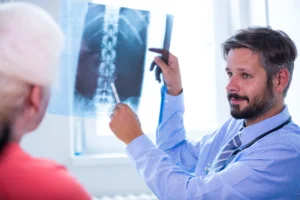
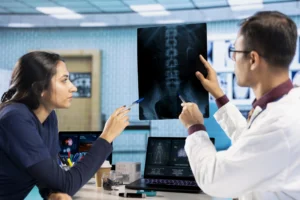
Step 2 — Imaging Tests
Physical examination alone may not confirm the exact location or severity. Your doctor may recommend:
- MRI Scan (Most Recommended): The gold standard for diagnosing slip disc. It shows the soft tissues, nerves, and spinal cord clearly — without radiation.
- CT Scan: Used when an MRI is not available or when bone abnormalities are suspected alongside disc problems.
- X-Ray: Cannot show disc problems directly, but helps rule out other causes like fractures or infections.
- Nerve Conduction Study (NCS/EMG): Checks how nerve signals are travelling — useful when numbness or weakness is present.
Treatment of Slip Disc — What Are Your Options?
The encouraging news: 90% of slip disc cases improve without surgery with the right treatment and time. Treatment is divided into two main categories — non-surgical and surgical.
Non-Surgical (Conservative) Treatment
This is almost always tried first. Most patients see significant improvement within 6 weeks.
1. Rest and Activity Modification: Complete bed rest is NOT recommended. Rest for 1–2 days, then return to gentle movement. Avoid heavy lifting and prolonged sitting.
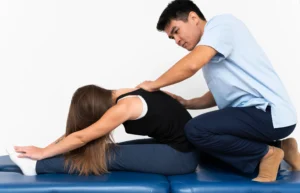
2. Physiotherapy and Exercise: The cornerstone of recovery. A physiotherapist will guide you through core strengthening, nerve-pressure stretches, and posture correction — including McKenzie exercises to help reposition the disc.
3. Medications
- NSAIDs reduce inflammation and pain
- Muscle relaxants ease spasms; nerve pain medications address tingling and burning
4. Steroid Injections: When medications and physiotherapy are not enough, a steroid injection around the affected nerve provides targeted relief — often lasting several weeks to months.
5. Hot and Cold Therapy: Apply ice packs for the first 48–72 hours to reduce swelling, then switch to heat to relax tight muscles around the spine.
Surgical Treatment for Slip Disc
Surgery is considered when:
- Pain is severe and not improving after 6–12 weeks of conservative treatment
- You have a significant weakness in your leg or arm
- You have difficulty walking or standing
- You experience loss of bladder or bowel control
Types of Surgery:
Microdiscectomy (Most Common): A minimally invasive procedure where the surgeon removes the affected part of the disc pressing on the nerve. Most patients go home the same day or the next day and can walk within 24 hours.
Endoscopic Discectomy: Even less invasive than microdiscectomy. Uses a tiny camera and small instruments through a very small cut. Faster recovery, less blood loss, and less post-operative pain.
Spinal Fusion: In cases where the disc removal is more extensive, the two vertebrae may be fused together for stability. Recovery takes longer, but long-term outcomes are very good.
Slip Disc vs Sciatica — What Is the Difference?
This is one of the most common questions patients ask, and the confusion is completely understandable.
| Slip Disc | Sciatica | |
| What is it? | A structural problem with the disc | A symptom — pain along the sciatic nerve |
| Cause | Disc herniation, degeneration, injury | Often caused by a slip disc pressing on the sciatic nerve |
| Location of pain | Back, neck, or wherever the disc is | Runs from the lower back through the buttocks, down the leg to the foot |
| Are they related? | Yes — slip disc is a leading cause of sciatica | Sciatica can exist without a slip disc (e.g., piriformis syndrome) |
In simple words: A slip disc is what happens to the disc. Sciatica is the name for the pain that travels down your leg when that disc presses on the sciatic nerve. You can have a slip disc without sciatica, and sciatica can happen without a slip disc.
Slip Disc Prevention — Can It Be Avoided?
You cannot completely prevent age-related disc changes, but you can dramatically reduce your risk:
- Strengthen your core: Strong abdominal and back muscles support the spine and take pressure off the discs
- Lift correctly: Bend your knees, keep your back straight, and hold the weight close to your body
- Maintain a healthy weight: Every extra kilogram adds pressure to your lumbar discs
- Improve your posture: Sit with your back supported, feet flat on the floor, and screen at eye level
- Take regular breaks: If you sit for work, stand and walk for 5 minutes every hour
- Quit smoking: Smoking speeds up disc degeneration significantly
- Stay active: Regular walking, swimming, and yoga build spinal resilience over time
Cost of Slipped Disc Treatment in India
The cost varies significantly depending on the type of treatment required:
| Treatment Type | Approximate Cost (India) |
| Physiotherapy sessions | ₹500 – ₹1,500 per session |
| MRI scan | ₹3,000 – ₹8,000 |
| Epidural steroid injection | ₹8,000 – ₹20,000 |
| Microdiscectomy surgery | ₹1,20,000 – ₹3,00,000 |
| Endoscopic discectomy | ₹1,50,000 – ₹3,50,000 |
| Spinal fusion surgery | ₹2,50,000 – ₹5,00,000 |
Note: These are approximate figures. Actual costs depend on the hospital, city, surgeon’s experience, and individual case complexity. Many procedures are partially covered by health insurance.
Recovery & Rehabilitation After Slip Disc
Recovery depends on the severity of the condition and the treatment chosen.
Without Surgery
Most patients recover within 6–12 weeks. The timeline typically looks like this:
- Week 1–2: Rest, pain management, gentle movement
- Week 3–6: Physiotherapy begins, gradual return to daily activities
- Months 2–6: Full recovery for most patients
After Surgery (Microdiscectomy)
Recovery is faster than most people expect:
- Day 1–2: Walking with support, discharged from hospital
- Week 4–6: Physiotherapy begins for core strengthening
- Month 3–6: Return to normal work and activities
Key habits for faster recovery:
- Follow your physiotherapy program consistently — it matters more than any medication
- Sleep on your side with a pillow between your knees and avoid soft mattresses or low sofas
When to See a Doctor
Do not wait too long if you experience:
- Back or neck pain that has lasted more than 2 weeks without improvement
- Pain that is travelling down your arm or leg
- Numbness or tingling that does not go away
- Increasing weakness in your arm or leg
- Pain that is worsening despite rest and pain medication
- Any loss of bladder or bowel control — go to emergency care immediately
Early diagnosis leads to better, faster outcomes. Waiting too long can allow nerve damage to become permanent.
Frequently Asked Questions (FAQs)
1. What is the main cause of slip discs?
The most common cause is age-related disc degeneration, where discs dry out and weaken over time — made worse by poor posture, heavy lifting, or long hours of sitting.
2. Can slipped discs be repaired?
Yes — around 90% of patients recover fully without surgery through physiotherapy, medication, and lifestyle changes. Surgery is only needed in constant or severe cases.
3. Is a slip disc a serious problem?
For most people, it is painful but manageable with proper treatment. It becomes serious only when it causes progressive nerve damage or loss of bladder and bowel control.
4. How does a slipped disc feel?
It typically feels like sharp, burning pain in the back or neck — often radiating down the arm or leg with numbness, tingling, or electric-shock sensations.
5. How to cure a slip disc fast?
Start physiotherapy early, take anti-inflammatory medications as prescribed, stay gently active, and correct your posture. Most patients see clear improvement within 4–6 weeks.
Conclusion — Expert Care Makes the Difference
A slip disc is painful — but for most patients, it is fully treatable, and life does get back to normal. The key is an accurate diagnosis, timely treatment, and consistent physiotherapy.
If you are dealing with back pain, neck pain, or nerve-related symptoms, Dr. Amit Shridhar — one of Delhi’s most trusted spine surgeons — offers expert diagnosis and both surgical and non-surgical care for slip disc, with a patient-first approach focused on real, lasting results.