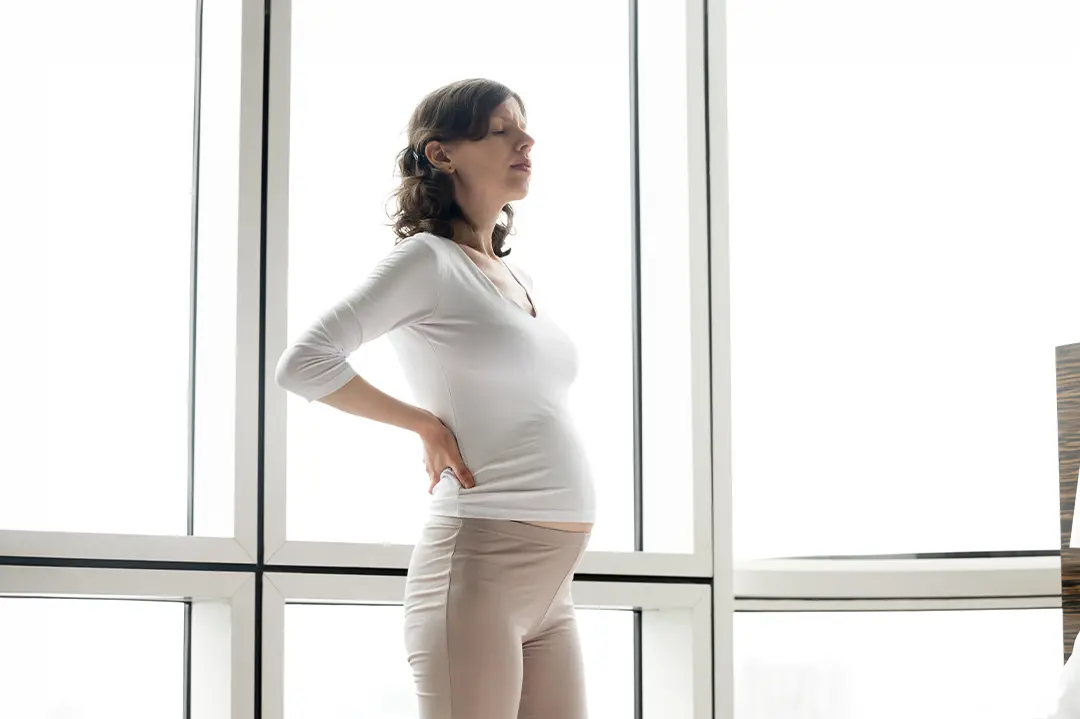
Feeling a dull ache in your lower back in the first few weeks of pregnancy? You’re not alone. Many women notice back pain during early pregnancy long before the “baby bump” ever shows up, and it can feel confusing when a symptom you associate with the third trimester shows up so early instead.
The good news: most of the early pregnancy back pain is your body adjusting — not a sign something is wrong. Your ligaments, muscles, and posture start shifting in the first few weeks, well before any visible bump can explain the discomfort.
This complete guide covers the real causes, safe relief tips, and the warning signs of back pain that mean it’s time to call your doctor, so you can tell the difference between normal adjustment and something that needs attention.
Is Back Pain Normal in Early Pregnancy?
Yes — mild, dull back pain is common as early as 4 to 8 weeks. It’s usually linked to hormonal shifts and the earliest ligament changes your body makes to prepare for pregnancy. Many women describe it as a low, achy pressure near the lower spine or pelvis, similar to a pulled muscle or the ache before a menstrual period, rather than anything sharp or stabbing.
To understand the wider picture beyond pregnancy, you can also read about the Common Causes of Back Pain many women experience at different life stages, since some of the same posture and muscular factors overlap.
Sharp, one-sided pain, or pain paired with bleeding or cramping, is different and needs prompt medical attention — more on that below.
10 Causes of Back Pain During Early Pregnancy
Understanding the causes of back pain during early pregnancy helps you know what’s typical and what’s not. Most of the time, more than one of these factors is at play together.
- Hormonal changes — Relaxin loosens ligaments around the pelvis and spine early on, which is essential for delivery later but can make joints feel less stable in the meantime
- Uterine growth — Even subtle expansion shifts pressure on nearby muscles and the surrounding connective tissue, long before it’s visible from the outside
- Posture changes — Your center of gravity starts shifting sooner than you’d expect, which can quietly change how you stand, sit, and sleep without you noticing
- Stress and tension — Emotional stress often shows up as muscle tightness in the back, especially across the lower back and shoulders
- Implantation-related cramping — Can radiate to the lower back in very early pregnancy, sometimes mistaken for an oncoming period
- Fatigue — Poor sleep posture and exhaustion strain back muscles, and early pregnancy fatigue can make it harder to notice and correct bad positioning
- Pre-existing spine conditions — Disc issues or sciatica can flare up earlier in pregnancy as ligaments loosen and posture shifts
- Urinary tract infections (UTIs) — Common in early pregnancy and can cause referred back pain, often felt lower down near the kidneys or pelvis
- Constipation and bloating — Pressure on the lower back from digestive changes, which are common in the first trimester due to hormonal slowdown of digestion
- Sedentary habits — Prolonged sitting weakens core support for the spine, making it harder for your back to absorb the extra strain of pregnancy
How Long Does Early Pregnancy Back Pain Last?
For most women, early pregnancy back pain comes and goes rather than staying constant. It often eases as the body adapts to hormonal changes over the first trimester, then can return later as the uterus grows further. There’s no single fixed timeline — some women feel it only for a few days around specific hormonal shifts, while others notice a low-grade ache on and off for weeks.
If the pain steadily worsens instead of easing, or starts interfering with sleep and daily movement, that’s a signal to get it evaluated rather than assuming it will resolve on its own.
Early Pregnancy Back Pain vs Later Trimesters
Knowing that back pain doesn’t remain constant during pregnancy is helpful; the cause and nature of the pain typically changes as the pregnancy advances. Back pain is more likely to be associated with hormonal changes, fatigue, and minor postural changes in the first trimester than with the baby’s weight, as there is no added weight to support at this stage.
Things look different in the second and third trimesters. As the uterus expands, you experience actual mechanical loading, your center of gravity moves further forward, and the joints between the pelvis and the spine loosen further in preparation for labor. This is when many women start to notice pain that’s more clearly tied to standing or walking for long periods, and when conditions like sciatica or pelvic girdle pain become more common.
Knowing where you are in your pregnancy can help you and your doctor decide on the best treatment — for early pregnancy back pain, rest, gentle exercise and stress management may be enough, while for late pregnancy back pain, you might need more structured support such as a maternity belt, targeted physiotherapy or more intensive monitoring if the back pain is severe.
Risk Factors That Make Pregnancy Back Pain Worse
Certain risk factors increase the likelihood or severity of early pregnancy back pain. Being aware of these ahead of time can help you take preventive steps early rather than waiting for pain to appear:
- History of lower back pain before pregnancy
- Weak core or pelvic floor muscles
- Being overweight or carrying multiples
- Previous spine injury or herniated disc
- Sedentary lifestyle before conception
- High stress levels
If several of these apply to you, it’s worth mentioning them to your doctor early, since a proactive plan — like starting gentle core work or physiotherapy sooner — can make a real difference later in pregnancy.
Differential Diagnosis: When It’s Not Just Pregnancy
Differential diagnosis matters because not every ache is pregnancy-related. Doctors rule out other causes such as:
- Kidney infection or UTI
- Ectopic pregnancy (sharp, one-sided pain — seek urgent care)
- Sciatica or disc herniation
- Miscarriage-related cramping
- Appendicitis or gallbladder issues
If the pain is sharp and concentrated on one side rather than a general ache, it’s worth reading more about Right Side Back Pain to understand when that pattern needs urgent evaluation. Don’t self-diagnose — get evaluated if anything feels unusual or severe, since early pregnancy pain can sometimes mimic more serious conditions that are easier to treat when caught early.
Treatment for Early Back Pain During Pregnancy
Most treatment for early back pain during pregnancy focuses on safe, non-invasive relief that supports your body’s natural adjustment rather than fighting against it:
- Gentle prenatal stretching and yoga
- Warm (not hot) compresses on the lower back
- Supportive, low-heeled footwear
- Sleeping on your side with a pillow between the knees
- Staying active with pregnancy-safe movement
- Maintaining good posture while sitting and standing
Small daily habits often matter more than occasional intensive fixes — a short stretch break every hour, a supportive chair, and consistent sleep positioning tend to add up to noticeably less discomfort over a few weeks. Setting up your workspace ergonomically, using a rolled towel or small cushion for lumbar support while sitting, and avoiding standing in one position for too long can also meaningfully reduce daily strain on your lower back.
Consider Complementary Therapies
Many women safely benefit from complementary therapies alongside standard care, such as:
- Prenatal physiotherapy
- Gentle chiropractic care (with an obstetrician-cleared provider)
- Prenatal massage therapy
- Acupuncture (consult your doctor first)
Always check with your obstetrician before starting any new therapy, and choose practitioners experienced specifically in prenatal care — technique and pressure points that are safe outside pregnancy aren’t always appropriate during it.
Proper Lifting During Pregnancy: Do’s and Don’ts
Proper lifting during pregnancy protects your spine as ligaments loosen and joints become less stable:
Do:
- Bend at the knees, not the waist
- Keep the object close to your body
- Ask for help with anything heavy
Don’t:
- Twist while lifting
- Lift anything that strains your breathing
- Reach overhead while carrying weight
These habits are worth building early, since the ligament laxity that makes lifting riskier only increases as pregnancy progresses.
When to Contact Your Doctor
Know when to contact your doctor rather than waiting it out. Reach out promptly if you notice:
- Sudden, severe, or one-sided abdominal/back pain
- Vaginal bleeding or spotting with back pain
- Fever, chills, or burning during urination
- Pain that doesn’t ease with rest or position changes
- Numbness, tingling, or weakness in the legs
None of these symptoms should be brushed off as “just pregnancy back pain” — they warrant a same-day call to your provider.
Frequently Asked Questions
1. Is it normal to have back pain at 4 weeks pregnant?
Yes, mild lower back pain at 4 weeks can be normal. Hormonal shifts and early ligament changes can cause it, but severe or one-sided pain should be checked by a doctor.
2. What kind of back pain indicates early pregnancy?
Early pregnancy back pain is usually a dull, low ache near the lower spine or pelvis, often paired with cramping, fatigue, or breast tenderness in the first few weeks.
3. What are some causes of lower back pain during pregnancy?
Common causes include hormonal changes, ligament loosening, growing uterus size, posture shifts, stress, and pre-existing conditions like disc issues or sciatica.
4. How many weeks does back pain start in pregnancy?
Back pain can start anywhere from 4 to 8 weeks into pregnancy for some women, though it more commonly becomes noticeable in the second trimester as the belly grows.
5. Can back pain start at 3 weeks pregnant?
Yes, some women notice mild back pain as early as 3 weeks, often linked to hormonal changes and implantation, though it’s usually subtle rather than sharp or severe.
Conclusion
Back pain during early pregnancy is common and, in most cases, simply your body adapting to hormonal and physical changes. Safe stretching, good posture, proper lifting, and rest usually help — but persistent, severe, or unusual pain always deserves a professional look, not guesswork.
If your back pain isn’t easing up or feels different from typical pregnancy discomfort, consult Dr. Amit Shridhar – Best Spine Surgeon in Delhi for an evaluation tailored to safely protect both mother and baby.