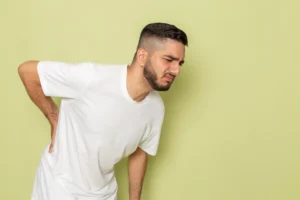

Right side back pain can feel worrying, especially when you are unsure whether it is simply a muscle strain or something more serious. The pain may be mild or sharp and can sometimes make daily activities like walking, sitting, bending, or sleeping uncomfortable.
The reassuring truth is that many cases of right side back pain are related to muscle strain, posture, or other conditions that can improve with appropriate treatment and care. However, pain related to the spine, nerves, kidneys, or other organs may require medical evaluation.
This complete guide explains the common causes of right side back pain, the symptoms to watch for, available treatment options, and clear guidance on when you should see a doctor for proper evaluation.
Understanding Right Side Back Pain
Right side back pain refers to pain felt on the right side of the spine — anywhere from the right upper back below the shoulder blade, through the mid-back, to the lower right back pain and into the right buttock or leg.
What makes right side back pain particularly crucial to evaluate properly is that not all of it comes from the spine or back muscles. Several internal organs — the right kidney, liver, gallbladder, and appendix — are located on the right side of the body and can produce referred pain that feels exactly like back pain.
This is why right-sided back pain that is constant, progressive, or accompanied by other symptoms — fever, urinary changes, abdominal pain — always deserves medical evaluation rather than simple self-treatment.
Common 5 Causes of Right Side Back Pain
Cause 1 — Muscle Strain and Soft Tissue Injury
Muscle strain is the most common single cause of right side back pain — accounting for the majority of acute presentations. The back muscles on the right side can be strained by a sudden awkward movement, heavy lifting, prolonged sitting in a poor posture, or sleeping in an unusual position.
Characteristics of muscle strain back pain:
- Comes on after a specific activity or position
- Sharp or aching pain that is localised to the right back area
- Usually improves within 1-2 weeks with appropriate care
Cause 2 — Lumbar Disc Problems at L3-L5 (Right Side)
A slipped disc, herniated disc, or bulging disc in the lumbar spine — particularly at the L3-L4, L4-L5, or L5-S1 levels — can compress a nerve root on the right side of the spine, producing right-sided back pain that may also travel down the right leg (sciatica).
Characteristics of disc-related right back pain:
- Deep aching right lower back pain
- Numbness, tingling, or weakness in the right leg or foot
- Improves with walking or lying in a specific position
Cause 3 — Right Kidney Stone or Kidney Infection
The right kidney sits in the upper right back area — and both kidney stones and kidney infections produce pain that is commonly felt as right back pain, usually in the right flank (the area between the ribs and the hip).
Characteristics of kidney-related right back pain:
- Pain in the right flank area — below the right ribs, above the right hip
- Kidney stone pain is typically severe, colicky (comes in waves), and may move toward the groin
- Kidney infection pain is more constant, associated with fever, chills, and burning urination
Cause 4 — Gallbladder Problems
The gallbladder is located under the right side of the liver — and when inflamed (cholecystitis) or obstructed by gallstones, it commonly produces pain that radiates to the right upper back and right shoulder blade area.
Characteristics of gallbladder-related right back pain:
- Pain in the right upper back or right shoulder blade area
- Often occurs after a fatty meal
- May cause a fever if the gallbladder is infected
Cause 5 — Spinal Stenosis or Facet Joint Arthritis
Spinal stenosis — the narrowing of the spinal canal — and facet joint arthritis are common causes of right-sided back pain in adults over 50. Facet joint degeneration on the right side of the spine produces localised right back pain and stiffness, particularly in the morning or after prolonged sitting.
Characteristics of spinal stenosis and facet arthritis:
- Right lower back pain and stiffness — worse in the morning or after inactivity
- Facet pain is localised and does not typically radiate into the leg
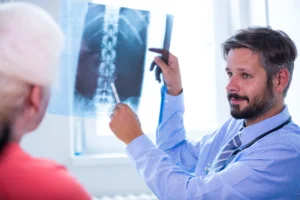
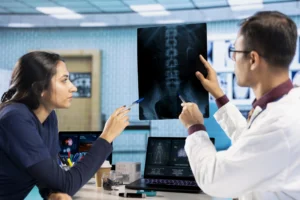
- Both conditions are diagnosed on MRI or CT scan
Other Causes of Right Side Back Pain
Beyond the five primary causes, several additional conditions can produce right-sided back pain:
- Appendicitis — though appendix pain typically starts around the navel and moves to the lower right abdomen, it can initially present with right lower back discomfort
- Liver problems — hepatitis or liver congestion can produce a dull ache in the right upper back
- Scoliosis — spinal curvature that disproportionately loads the right side of the spine
- Rib fracture or costochondritis — rib injuries or cartilage inflammation producing right-sided pain that worsens with breathing
- Shingles (Herpes Zoster) — can produce right-sided back pain before the rash appears — a commonly missed early diagnosis
- Pregnancy-related back pain — as the uterus grows, spinal load changes and right-sided back pain is particularly common in the second and third trimester
Causes of Right Side Back Pain in Females
Right side back pain in females has some gender-specific causes that are important to recognise:
- Endometriosis — when endometrial tissue grows outside the uterus, it can involve structures on the right side of the pelvis, producing right lower back and pelvic pain, particularly during menstruation
- Ovarian cyst (right ovary) — a cyst on the right ovary produces pain felt in the right lower back and right lower abdomen
- Ectopic pregnancy — a pregnancy implanted in the right fallopian tube produces severe right lower back and abdominal pain — a medical emergency
- Menstrual-related back pain — the right side may be disproportionately affected in some women due to uterine position or right-sided pelvic muscle tension
- Pelvic inflammatory disease (PID) — infection of the reproductive organs producing right-sided pelvic and lower back pain
Causes of Right Side Back Pain in Males
Males have some gender-specific causes of right-sided back pain:
- Right kidney stone — statistically more common in males, producing right flank and right back pain as the stone moves
- Prostatitis — inflammation of the prostate can produce lower back and pelvic pain, including right-sided discomfort
- Occupational back strain — male-dominated physical jobs produce higher rates of mechanical right back pain from repetitive asymmetric loading
- Sports-related injury — right-sided muscle strains and disc injuries from sport and physical activity are particularly common in active males
Symptoms of Right Side Back Pain to Watch For
The character of your symptoms helps identify the likely cause — and which require urgent evaluation:
Mechanical (musculoskeletal) symptoms:
- Pain worse with specific movements — bending, twisting, lifting
- Stiffness after rest that improves with gentle movement
- Localised aching or sharp pain without spreading
Nerve-related symptoms:
- Shooting pain from the right back down the right leg
- Numbness or tingling in the right leg, foot, or specific toes
- Weakness in the right leg or difficulty lifting the right foot
Organ-related symptoms:
- Fever alongside back pain — suggests infection (kidney, gallbladder)
- Blood in urine, painful urination, or frequent urination — kidney or urinary cause
- Nausea, vomiting, or right-sided abdominal pain — gallbladder, liver, or appendix
- Pain that does not change with movement or position — more likely organ than musculoskeletal
Treatment Options for Right Side Back Pain
Treatment depends entirely on the underlying cause — which is why accurate diagnosis is the crucial first step.
For mechanical muscle and spinal causes:
- Physiotherapy — targeted exercises to correct posture, strengthen supporting muscles, and decompress affected spinal levels
- Heat and ice therapy — ice in the first 48 hours of acute strain, heat for chronic muscle tension
- Epidural steroid injections — for disc-related nerve root compression that has not responded to physiotherapy
- Surgery — microdiscectomy, decompression, or fusion when conservative treatment fails, or neurological deficit is progressive
For organ-related causes:
- Kidney stones — hydration, pain relief, lithotripsy, or ureteroscopy depending on stone size
- Kidney infection — antibiotics, hydration, and specialist urological review
- Gallbladder disease — dietary modification, medication, or cholecystectomy (gallbladder removal)
- Gynaecological causes — managed by gynaecology with appropriate surgical or hormonal treatment
When to See a Doctor for Right Side Back Pain
Most right-sided back pain from muscle strain resolves within 1-2 weeks with appropriate self-care. However, some back pain situations require prompt medical assessment:
See a doctor within 24-48 hours if:
- Back pain is accompanied by fever or chills
- You notice blood in your urine or painful urination
- Pain is severe, constant, and does not change with position
- Right lower abdominal pain accompanies the back pain
- The pain began after a significant injury or fall
Seek emergency care immediately if:
- Sudden severe right back pain with difficulty breathing
- Loss of bladder or bowel control alongside back pain — possible cauda equina syndrome
- Severe right-sided pain radiating to the groin — possible kidney stone emergency
- Pregnancy with sudden severe right-sided pain — possible ectopic rupture
Frequently Asked Questions
1. What could be causing pain on the right side of my back?
Right side back pain may result from muscle strain, herniated discs, kidney stones or infection, gallbladder problems, or conditions such as ovarian cysts. Fever, urinary changes, or abdominal pain may indicate an organ-related cause.
2. Why is my back hurting only on the right side?
One-sided back pain can result from muscle strain, a disc herniation affecting a right-sided nerve, or problems involving the right kidney, gallbladder, or appendix. A medical evaluation can help identify the cause.
3. How to relieve right side back pain at home?
For mild mechanical pain, ice during the first 48 hours followed by gentle heat, appropriate OTC pain relief, and light mobility exercises may help. Severe pain or pain with fever or urinary symptoms needs medical evaluation.
4. When should I worry about right side back pain?
Seek medical attention if pain occurs with fever, blood in urine, painful urination, severe abdominal pain, or unexplained weight loss. Urgent care is needed for leg weakness, numbness, or bladder or bowel control problems.
5. What vitamin deficiency causes back pain?
Vitamin D deficiency is commonly associated with chronic musculoskeletal pain and weak bones. Vitamin B12 deficiency may also cause nerve-related pain. Blood tests can identify these deficiencies.
Conclusion
Right side back pain is rarely just “back pain” — understanding whether it is coming from the spine, the muscles, or an internal organ determines the entire treatment approach. Most cases are musculoskeletal and respond well to physiotherapy and appropriate medication. But the right-sided location adds important diagnostic possibilities that should not be dismissed, particularly when accompanied by urinary symptoms, fever, or abdominal pain.
Dr. Amit Shridhar — Best Spine Surgeon in Delhi — provides expert evaluation of right side back pain, distinguishing spinal causes from other conditions and offering the full range of non-surgical and surgical treatment options for patients across Delhi NCR.