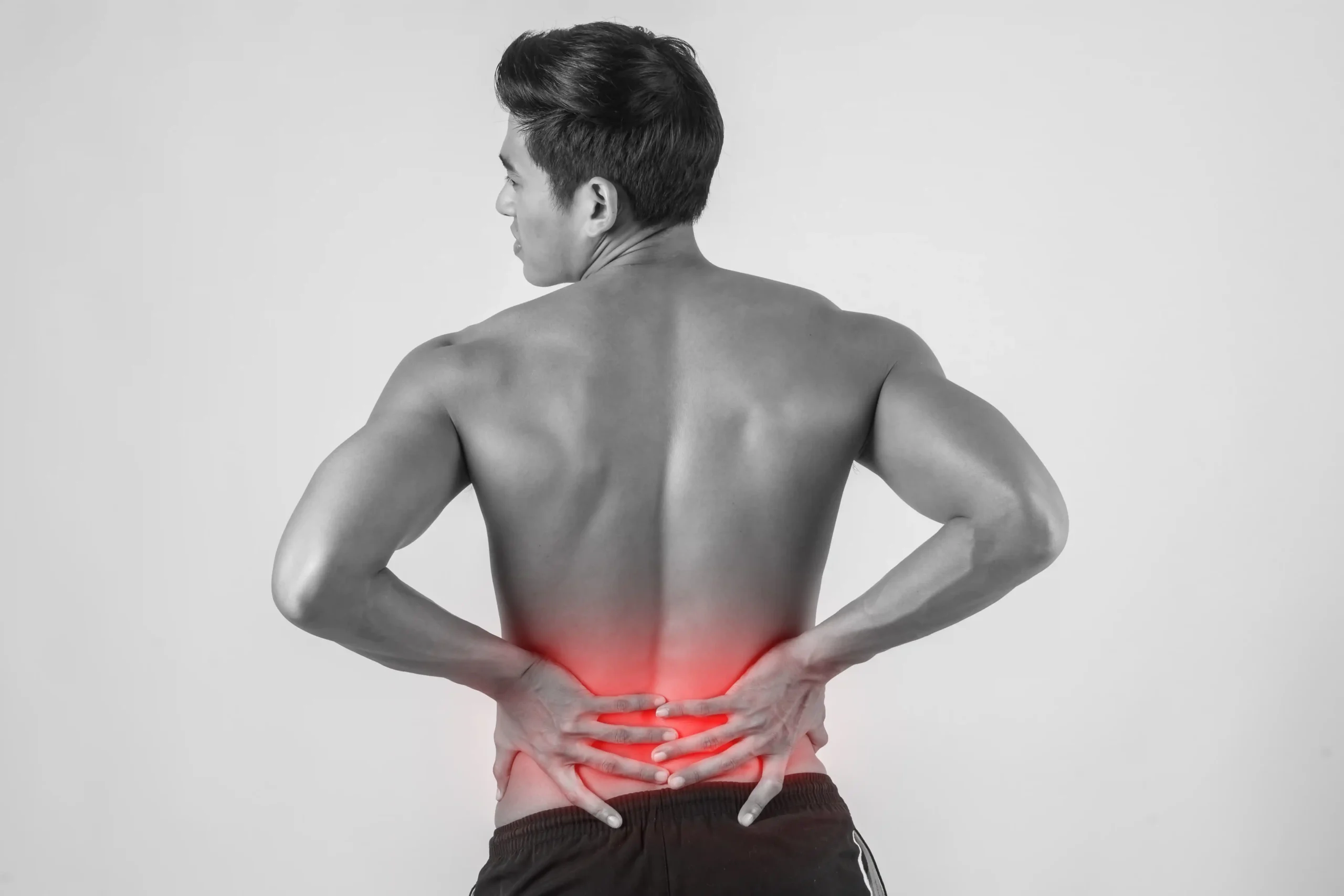
Lower back pain that spreads to your legs can be frustrating and limit your daily activities. One of the most common reasons behind this type of pain is an L5 S1 disc bulge, which often leads to conditions requiring proper Sciatica Treatment. This condition affects the lower part of the spine, where most of your body weight is supported.
Many patients ignore early signs, thinking it is just normal back pain. However, understanding an L5 S1 disc bulge early can help prevent complications and improve recovery. In our clinical experience, patients who seek timely care often recover faster and avoid surgery.
Table of Contents
What is L5 S1 Disc Bulge?
An L5 S1 disc bulge happens when the disc between the lower back bones (L5 and S1) starts to push outward from its normal position. Unlike a herniated or slipped disc, the outer layer of the disc is still intact, but it bulges enough to press on nearby nerves.
This disc is located at the bottom of your spine and carries most of your body weight, which is why it is more likely to be affected by daily movements, posture, and strain.
Where Is the L5-S1 Disc Located in Your Spine?
L5-S1 refers to the very last disc in your lower spine — the junction where the fifth lumbar vertebra (L5) meets the first bone of the sacrum (S1). In simple terms, it sits at the base of your spine, roughly at the level of your waistline, just above where your pelvis begins.
This is the lowest — and often hardest-working — disc in your entire spine. Because it connects the mobile lower back to the fixed pelvis, it absorbs a disproportionate share of the load every time you sit, bend, lift, or twist, which is why it’s one of the most common sites for disc bulges.
Understanding the Role of the L5 S1 Spinal Disc in Back Health
The L5 S1 disc works like a cushion between two bones in your lower back, helping you bend, twist, and carry weight smoothly. Because of its position, it is more prone to stress and injury.
- The sciatic nerve passes through this area, so any pressure here can cause severe pain in the back and legs
- It sits where the flexible lower spine meets the stable pelvic area, so it handles a lot of daily strain
- If affected, it can impact nerves going to the legs and feet, and in severe cases, even affect bladder or bowel control
L5 S1 Disc Bulge Symptoms — What Does It Feel Like?
Symptoms vary depending on the degree of nerve compression involved. Many patients begin with mild discomfort that gradually worsens without treatment.
Lower Back Pain:
- Dull, aching lower back pain worsening with prolonged sitting or standing
- Sharp pain with bending, lifting, or twisting movements
Radiating Leg Pain (Sciatica):
- Pain that starts in the lower back and travels through the hips down to the leg
- A burning or sharp, electric-like sensation along the path of the sciatic nerve
Neurological Symptoms:
- Numbness or tingling in the foot, toes, or outer calf
- Weakness in the foot — difficulty lifting the foot when walking in severe cases
Positional Symptoms:
- Pain worsens when sitting forward or with coughing and sneezing
- Relief when lying flat with knees bent
Early L5 S1 disc bulge symptoms are frequently misdiagnosed as general back pain — an MRI scan is the gold standard for accurate diagnosis.
L5-S1 Pain Pattern: How L5 and S1 Nerve Compression Feel Different
At the L5-S1 level, a disc bulge can press on either the L5 nerve root or the S1 nerve root — and each produces a slightly different pain pattern, which is why understanding your specific pattern helps guide treatment.
- L5 nerve compression typically causes pain and numbness along the outer leg and top of the foot, sometimes with weakness lifting the big toe or foot (foot drop in severe cases)
- S1 nerve compression typically causes pain along the back of the leg and calf, radiating into the sole and little toe, and can affect the ability to rise onto the toes
- Both patterns often start as lower back pain that gradually extends down the leg following the nerve’s path, rather than appearing suddenly in the leg alone
Identifying which nerve root is involved is typically confirmed through a clinical examination and MRI, and this distinction directly shapes which physiotherapy exercises and, if needed, which surgical approach will be most effective.
L5 S1 Disc Bulge Warning Signs — When to See a Doctor Immediately
Certain symptoms require urgent spine evaluation and should never be ignored:
- Loss of control over bladder or bowel — this can be a serious condition and needs immediate medical attention
- Progressive leg weakness that is rapidly worsening
- Numbness in the inner thighs, groin, or saddle area
Delaying treatment in such cases can lead to permanent nerve damage, so it’s important to seek immediate medical care if these symptoms appear.
L5 S1 Disc Bulge Causes and Risk Factors
L5 S1 disc bulge develops gradually through a combination of structural wear, lifestyle habits, and genetic predisposition — rarely from a single event.
Primary Causes:
- Age-related degeneration — discs lose water content and elasticity from the late 20s onward
- Repetitive mechanical stress — prolonged sitting, repeated lifting, and twisting accelerate disc breakdown
- Poor posture — sustained forward-flexed posture significantly increases intradiscal pressure at L5 S1
- Acute trauma — a heavy lift with poor form or a fall can precipitate bulging in an already-weakened disc
Key Risk Factors:
- Obesity and a sedentary lifestyle
- Smoking — reduces disc nutrition and accelerates degeneration
- Occupational hazards — drivers, desk workers, construction workers
Posterior Disc Bulge at L5-S1 — How It Differs from a Diffuse Bulge
A posterior disc bulge means the disc is pushing backward, toward the spinal canal and nerve roots — this is the most common direction seen on MRI reports at L5-S1, because it’s the direction most affected by prolonged sitting and forward-flexed posture.
- A mild posterior disc bulge typically causes localised lower back pain, with nerve symptoms (leg pain, tingling) appearing only if the bulge is large enough to reach a nerve root
- This differs from a diffuse bulge (covered above), which pushes outward evenly in all directions rather than in one specific direction
- Most mild posterior disc bulges respond well to conservative treatment, particularly when caught early and managed with posture correction and targeted physiotherapy
The exact direction and size of your bulge — as described in your MRI report — helps determine which exercises are safe and which treatment approach is likely to work best.
Diffuse Disc Bulge at L5 S1 — What Does It Mean?
A diffuse disc bulge at L5 S1 means the disc is bulging out evenly in all directions, instead of pushing out in just one spot like a herniated disc.
- May cause broader, less localised lower back pain rather than one-sided sciatica
- Associated with more advanced disc degeneration and reduced disc height
Diffuse disc bulges respond well to conservative treatment in most cases, though recovery may take longer than a focal disc problem.
L5 S1 Disc Bulge Treatment Options
Treatment for L5 S1 disc bulge depends on symptom severity and nerve involvement. Around 80–90% of patients improve without surgery, but surgical options are available if needed.
Non-Surgical Treatment
Non-surgical treatment is always the first line and works best when started early and followed consistently.
- Physiotherapy — core strengthening, McKenzie exercises, lumbar stabilisation, and neural mobilisation form the backbone of recovery
- Pain medications — Some Pain Medications may be used to reduce discomfort and help you continue with physiotherapy and daily activities more comfortably.
- Spinal injections — In some cases, targeted injections may be used to reduce nerve irritation and provide relief when other treatments are not enough.
Surgical Treatment
Surgery is considered when conservative treatment fails after 6-12 weeks or when neurological symptoms are progressive.
- Microdiscectomy — gold standard procedure removing disc material, compressing the nerve root through a minimal incision. 90-95% success rate for leg pain relief with return to activity within 2-4 weeks
- Endoscopic spine surgery — most advanced minimally invasive option using a 7- 8 mm incision. Less post-operative pain, faster recovery, and patients often walk the same day
Surgical outcomes for L5 S1 disc bulge are excellent — particularly for relief of leg pain and sciatica caused by nerve compression.
L5 S1 Bulging Disc Exercises: The Do’s and Critical Don’ts
Exercise is one of the most powerful tools for recovery — but the wrong movements can make things significantly worse.
Exercises That Help:
- Knee-to-chest stretch — reduces posterior disc pressure gently
- Pelvic tilts — activates deep core without loading the disc
- Bird-Dog — builds spinal stability in a neutral spine position
Movements to Avoid:
- Forward bending and toe touches — dramatically increase disc pressure
- Sit-ups and crunches — create high intradiscal load at L5 S1
- Heavy lifting with a rounded spine — the highest risk movement pattern
Always have your exercise programme individually assessed by a qualified physiotherapist — the right exercises depend on the direction of your specific disc bulge.
L5 S1 Disc Bulge Recovery Time — What to Realistically Expect
Recovery time for L5 S1 disc bulge varies significantly based on severity, treatment approach, patient age, and compliance with physiotherapy.
| Treatment Approach | Expected Recovery Timeline |
| Mild disc bulge — physiotherapy only | 4-8 weeks for significant improvement |
| Moderate disc bulge with sciatica | 8-12 weeks with consistent physiotherapy |
| Severe disc bulge with nerve compression | 3-6 months with intensive conservative care |
| Post-microdiscectomy | 6-8 weeks for full return to activity |
| Post-endoscopic surgery | 3-4 weeks for most daily activities |
Factors that speed recovery:
- Starting physiotherapy within the first 2 weeks of symptoms
- Maintaining gentle daily activity rather than complete bed rest
Factors that slow recovery:
- Continued smoking and obesity
- Delayed or inconsistent physiotherapy
Most patients achieve significant improvement within 3 months with appropriate conservative management.
Frequently Asked Questions
1. Can an L5 S1 disc bulge be cured?
Yes — most cases resolve significantly with 8-12 weeks of conservative treatment. Surgery, when needed, has a 90-95% success rate for symptom relief.
2. What not to do with L5 S1 disc bulge?
Avoid forward bending, heavy lifting, sit-ups, prolonged sitting in a flexed position, and any twisting under load — all of which increase pressure on the disc.
3. Is walking good for the L5 S1 disc bulge?
Yes — gentle walking is excellent. It maintains movement and promotes disc nutrition without overloading the spine. Start with 10-15 minutes and gradually increase.
4. What organs are affected by L5-S1?
L5-S1 nerve roots supply the lower leg, foot, bladder, bowel, and sexual organs. Severe compression can cause weakness, numbness, and in extreme cases, cauda equina syndrome — a surgical emergency.
5. How to sleep with an L5 S1 bulging disc?
Sleep on your side with a pillow between your knees, or on your back with a pillow under your knees. Avoid sleeping on your stomach. A medium-firm mattress is recommended.
6. Where exactly is the L5-S1 disc located?
L5-S1 is the lowest disc in the spine, sitting at the junction between the last lumbar vertebra and the sacrum — roughly at waist level, just above the pelvis.
7. What’s the difference between a posterior and a diffuse disc bulge at L5-S1?
A posterior bulge pushes backward toward the nerve roots and is the most common type seen on MRI reports, while a diffuse bulge pushes outward evenly in all directions and is often linked to more advanced disc degeneration.
8. Can S1 nerve compression be treated without surgery?
Yes — most cases of S1 nerve compression improve with consistent physiotherapy, activity modification, and, if needed, targeted spinal injections. Surgery is generally considered only if symptoms
Conclusion
L5 S1 disc bulge is a common but very manageable spinal condition. With early diagnosis, consistent physiotherapy, and the right pain management approach, most patients recover fully without ever needing surgery.
If you are experiencing constant lower back pain, sciatica, or leg symptoms, do not wait for them to worsen. Dr. Amit Shridhar — Best Spine Surgeon in Delhi — specialises in the accurate diagnosis and comprehensive management of L5 S1 disc conditions, with both advanced conservative care pathways and minimally invasive surgical solutions available.