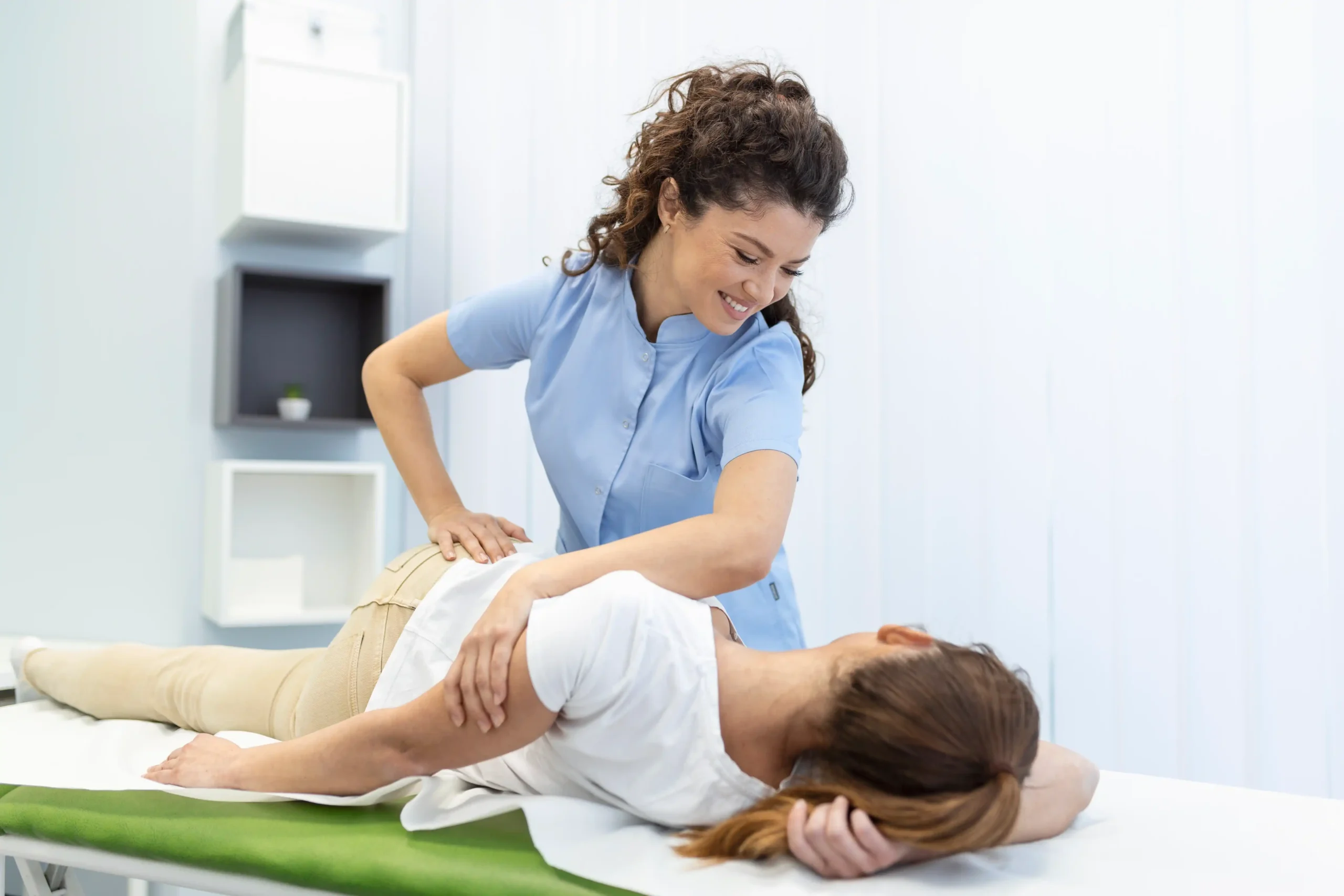
Sciatica pain can be sharp, burning, and sometimes so severe that it affects your ability to walk or sit comfortably. If you’re searching for a natural way to relieve this discomfort, sciatica massage is one of the most effective and useful recommended methods.
This complete guide will help you understand what sciatica massage is, how it works, and the 7 best sciatica massage techniques for fast pain relief. Whether you are dealing with mild discomfort or severe sciatic nerve pain, these techniques can provide significant relief when done correctly.
Table of Contents
What Is Sciatica Massage and How Does It Help?
Sciatica massage is the targeted application of pressure and movement to the muscles, soft tissues, and trigger points surrounding the sciatic nerve — with the goal of reducing nerve compression, releasing muscle tension, and relieving radiating leg pain.
The sciatic nerve runs from your lower back through the buttocks and down the back of your leg. When nearby muscles — especially the piriformis, glutes, and lower back muscles — become tight or inflamed, they press on the nerve and make the pain worse.
How does massage relieve sciatica?
Sciatica massage works through three clinical mechanisms:
- Reduces muscle tension — releases the tight muscles, directly compressing or irritating the sciatic nerve
- Improves blood circulation — increases oxygen and nutrient delivery to compressed nerve tissue, supporting healing
- Triggers endorphin release — the body’s natural pain-blocking chemicals, reducing pain signal intensity
Understanding the Sciatic Nerve & Massage Points
The sciatic nerve runs just below — and in some people even through — a muscle in the buttock called the piriformis. When this muscle becomes tight due to long sitting or poor posture, it compresses the nerve and causes pain, known as piriformis syndrome.
The lower back muscles also play a key role. When they tighten, they narrow the openings where sciatic nerve roots exit the spine — directly worsening nerve compression. Effective sciatica massage targets both areas together: the lower back to reduce spinal compression and the buttocks to release piriformis tension.
The Best Massage Points for Sciatica — Where to Focus
Before the techniques, knowing the most effective massage trigger points for sciatica guides where to apply pressure:
GB 30 — Outer buttock: Two-thirds of the distance between the hip bone and tailbone. The most powerful single massage point for sciatica — directly over the piriformis muscle.
BL 40 — Back of knee: Centre of the popliteal crease. Relieves pain travelling down the back of the leg.
BL 57 — Mid-calf: Centre of the calf muscle, halfway between the knee and heel. Releases calf cramps and lower leg pain from sciatica.
Lower back paraspinals: Either side of the L4-L5 and L5-S1 vertebrae. Releasing tension here directly reduces nerve root compression at the most commonly affected disc levels.
7 Best Sciatica Massage Techniques for Fast Pain Relief
These 7 massage techniques are arranged from the gentlest to the deepest — work through them for the best results.
1. Lower Back Effleurage — Warming Up Your Lower Back First
Effleurage is a slow, gliding stroke that warms your back muscles before any deeper massage begins. It is the crucial first step that makes every technique that follows more effective.
How to do it: Using both palms, apply slow upward strokes along the muscles on either side of the lower spine — from the base up to the mid-back. Repeat for 3-5 minutes.
Why it works: Brings blood flow to the lower back and loosens tight muscles — making deeper pressure more comfortable and more effective.
2. Piriformis Deep Pressure Massage — The Most Important Step for Sciatica
The piriformis is a small muscle deep in the buttocks that sits right next to the sciatic nerve. When it stays tight, it presses on the nerve and sends pain shooting down the leg.
How to do it: Press firmly into the outer buttock — two-thirds between your hip bone and tailbone — using your thumb, elbow, or tennis ball. Hold for 60-90 seconds, release slowly, repeat 3 times per side.
Why it works: Directly loosens the muscle pressing on your sciatic nerve — many people feel their leg pain reduce almost immediately.
3. Trigger Point Release — Finding and Releasing Painful Muscle Knots
Trigger points are tight knots inside muscles that send pain further down the leg in a pattern that feels exactly like sciatica. The buttocks and lower back are where these most commonly build up.
How to do it: Press your thumb firmly into a tender spot, hold for 20-30 seconds until the tightness eases, and release slowly. Work through 3-5 spots per session.
Why it works: Breaks the cycle of muscle tightness causing pain — once these knots release, the referred pain down the leg reduces noticeably.
4. Kneading (Petrissage) — Working Out Deeper Muscle Tension
Kneading goes deeper than warm-up strokes — lifting and squeezing the muscle to break up deeper layers of tightness that gentle pressure cannot reach.
How to do it: Using both hands, lift and squeeze the lower back muscles, then the buttock muscles in slow, circular movements. Spend 2-3 minutes on each area.
Why it works: Loosens deep tension around the sciatic nerve, improves spinal flexibility, and gives the nerve more room to move freely.
5. Tennis Ball Massage — Easy Self-Massage You Can Do Alone at Home
The tennis ball technique is one of the simplest and most effective ways to massage the piriformis yourself — no partner or equipment needed beyond a tennis ball.
How to do it: Place a tennis ball on the floor, sit on it so it presses into the outer buttock, lean your weight onto it, and hold for 60-90 seconds. Roll slowly to find other sore spots. Spend 3-5 minutes per side.
Why it works: Keeps steady, sustained pressure on the piriformis longer than a hand can — gradually melting away the deep tension squeezing your sciatic nerve.
6. Hamstring Massage — Releasing Tension Further Down the Leg
Your hamstrings attach to the pelvis and pull on it when tight — creating tension along the entire sciatic nerve pathway and making calf and foot symptoms noticeably worse.
How to do it: Apply slow, firm strokes from just below the buttock down to the back of the knee, followed by gentle kneading of the thigh. Spend 3 minutes on each leg.
Why it works: Loose hamstrings reduce pulling on the pelvis — directly easing tension along the full length of the sciatic nerve.
7. Cross-Fibre Friction — Clearing Out Deeper Tightness and Scar Tissue
This technique presses across the muscle rather than along it — breaking up older, tougher areas of tightness that normal massage cannot reach.
How to do it: Using your thumb or fingertips, press firmly across the muscle fibres at the piriformis and lower back in slow, short back-and-forth strokes. Apply for 1-2 minutes per area.
Why it works: Works through deeper scar tissue and old tightness — especially useful for people who have had sciatica for a long time.
Tips for the Best Sciatica Pain Relief Massage
Getting the most from sciatica massage requires consistent technique and the right preparation:
- Always warm up first — apply heat to the lower back for 15 minutes before massage. Warm muscles respond significantly better and reduce the risk of bruising
. - Never massage acutely inflamed tissue — if the area is hot, swollen, or intensely painful to even light touch, rest for 24-48 hours before massage.
- Work within comfortable limits — massage should feel like a firm, deep pressure — not sharp pain. If it causes shooting pain down the leg, reduce pressure immediately.
- Consistency beats intensity — daily 10-15 minute sessions consistently outperform occasional intensive sessions.
- Follow the massage with movement — gentle walking or neural flossing exercises after the massage, maintain the nerve mobility achieved during the session.
- Ice after deep tissue work — 10-15 minutes of ice on the massaged area after deep tissue techniques reduces post-massage soreness.
Massage Therapy for Sciatic Nerve Pain — What It Can and Cannot Do
Sciatica massage is a powerful complementary therapy — but it works within specific limits. It is most effective for piriformis syndrome, muscle tension worsening disc-related sciatica, and managing chronic sciatic nerve pain day to day.
However, massage is not a substitute for medical care when:
- Progressive leg weakness or foot drop is developing
- Bladder or bowel changes accompany sciatica symptoms
- Sciatica has not improved after 6 weeks of consistent home management
Frequently Asked Questions
1. Is it good to massage sciatica?
Yes — sciatica massage reduces piriformis tension, releases trigger points, and improves circulation around nerve roots. Avoid deep massage only if symptoms are acutely inflamed or neurological symptoms are worsening.
2. What is the best massage point for sciatica?
GB 30 — in the outer buttock, two-thirds between the hip bone and tailbone — is the most effective single massage point, sitting directly over the piriformis muscle.
3. What are the 4 stages of sciatica?
Early (pain dominant, full recovery likely), intermediate (numbness and mild weakness, good recovery), advanced (foot drop and significant weakness, slower recovery), and emergency (Cauda Equina Syndrome — requires immediate surgery).
4. How to release the sciatic nerve?
Combine piriformis massage at GB 30, neural flossing exercises, McKenzie extension movements, and hamstring stretching. For disc-related compression, epidural injections or microdiscectomy may be needed.
5. Will sciatica go away naturally?
Around 80-90% of cases resolve within 6-12 weeks with proper conservative care, including massage, physiotherapy, and activity changes. Progressive leg weakness or bladder changes need urgent medical review — do not wait.
Conclusion
Sciatica massage — applied consistently to the piriformis, lower back, and hamstrings — provides genuine, fast-acting relief for sciatic nerve pain. The 7 techniques in this guide cover every key muscle group in the sciatica pain pathway for both home and professional use.
When massage is not enough or neurological symptoms appear, specialist care becomes crucial. Dr. Amit Shridhar — Best Spine Surgeon in Delhi — offers expert sciatica diagnosis and comprehensive treatment across Delhi NCR, from targeted conservative care to minimally invasive surgery.