
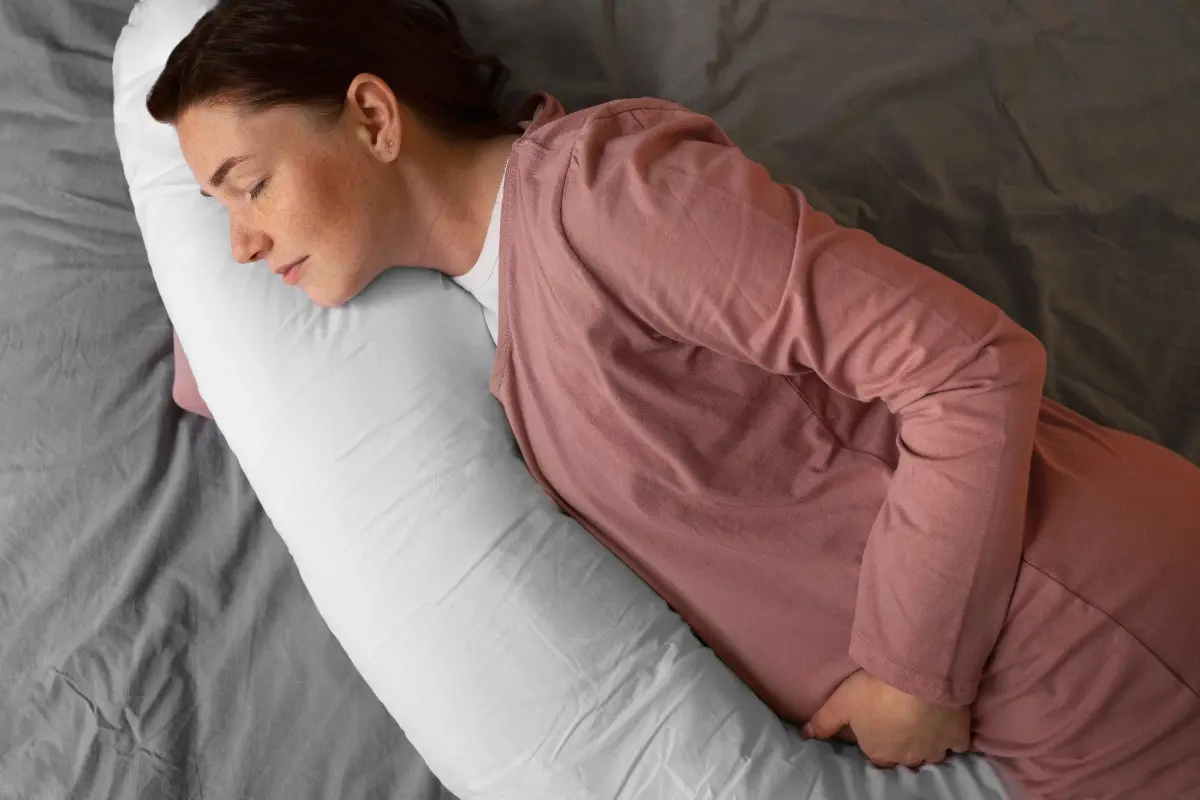
Sciatica pain can become even more uncomfortable at night. Many people struggle to find a comfortable sciatica sleeping position because pain, tingling, numbness, or pressure on the sciatic nerve often increases while lying down. Poor sleep can also affect recovery, energy levels, and overall quality of life.
The good news is that the right sleeping positions for sciatica may help reduce nerve pressure, improve spinal alignment, and support better sleep quality. Small adjustments in posture and pillow placement can make a noticeable difference.
In this Complete guide, you will learn the best sleeping positions for sciatica pain relief, practical nighttime tips, warning signs to watch for, and ways to improve recovery naturally.
Table of Contents
Understanding Sciatica and Why It Hurts More at Night
Sciatica is nerve pain caused by irritation or compression of the sciatic nerve, which runs from the lower back through the hips and legs. The pain may feel sharp, burning, tingling, or radiate down to the foot.
Many people notice that sciatica feels worse at night because lying still for long periods increases stiffness and makes the body more sensitive to pain. Poor sleeping posture and lack of support can also increase pressure on the lower back and sciatic nerve.
Why Sleep Position Matters With Sciatica
Your sleeping position directly affects the pressure on your lower back and sciatic nerve. Poor posture or position during sleep can increase nerve irritation, muscle tension, and discomfort throughout the night.
The right sciatica sleeping position helps keep the spine aligned, reduces pressure on the nerve, and relaxes surrounding muscles. Small posture adjustments can make sleeping more comfortable and support faster recovery.
What Makes Sciatica Pain Worse at Night?
Several specific factors make sciatic nerve pain more intense at night:
- Lying flat without support – increases lumbar disc pressure and nerve compression
- Cold muscles overnight — muscles tighten during sleep, increasing nerve tension
- Inflammatory cycles — the body’s natural inflammatory response peaks in the early morning hours
- Mattress problems — a mattress that is too soft or too firm fails to support the lumbar curve
- Wrong pillow placement — no pillow between the legs allows the pelvis to rotate, pulling on the sciatic nerve
10 Best Sleeping Positions for Sciatica Pain Relief
1. Side Sleeping With a Pillow Between the Knees
Side sleeping with a pillow between the knees is the single most recommended sciatica sleeping position by spine specialists worldwide. Lying on the non-painful side with a firm pillow between the knees keeps the pelvis aligned and prevents the spine from twisting.
Why It Works:
- Keeps the hips, pelvis, and spine in neutral alignment throughout the night
- Reduces rotational stress on the lumbar spine that pulls on the sciatic nerve root
How to Do It Correctly:
- Lie on the side opposite to your pain with both knees slightly bent
- Place a firm pillow between the knees and ankles — not just the knees
2. Foetal Position (Curled on Your Side)
The foetal position means lying on your side with your knees slightly pulled toward your chest. This sleeping position may help reduce pressure on the sciatic nerve and can help people with disc-related sciatica pain feel more comfortable.
Why It Works:
- Helps create more space between the spinal joints
- Reduces pressure on the lower back and sciatic nerve
How to Do It Correctly:
- Keep your knees slightly bent and avoid curling too tightly
- Place a pillow between your knees for better spinal support
3. On Your Back With a Pillow Under the Knees
Lying on your back with a pillow or rolled towel under the knees is a classic position for lumbar pain relief. It maintains the natural curve of the lumbar spine while reducing pressure on the lower back.
Why It Works:
- Reduces intradiscal pressure at the lumbar levels compared to lying completely flat
- Allows the lower back muscles to fully relax, reducing secondary muscle tension
How to Do It Correctly:
- Place a firm pillow under both knees — not just one
- Keep your arms by your sides and your neck in a neutral position with a supportive pillow
4. Reclined Position (Semi-Inclined on Your Back)
Sleeping in a slightly reclined position can help reduce pressure on the lower back and sciatic nerve. Many people feel more comfortable sleeping with their upper body slightly raised instead of lying completely flat.
Why It Works:
- Helps reduce pressure on the lower spine
- Supports a more relaxed and comfortable sleeping posture
How to Do It Correctly:
- Use a wedge pillow or adjustable bed for proper support
- Keep your knees slightly bent with a small pillow underneath them
5. On Your Back With a Towel Roll Under the Lumbar Curve
For patients whose sciatica is related to lumbar lordosis or disc degeneration, placing a rolled towel under the lumbar curve while lying on the back helps maintain the spine’s natural position throughout the night.
Why It Works:
- Supports the lumbar lordosis, preventing the lower back from flattening against the mattress
- Reduces disc compression at the L4-L5 and L5-S1 levels — the most commonly affected sciatica levels
How to Do It Correctly:
- Roll a towel to approximately 3-4 inches in diameter and place it at the waist — not the mid-back
- Combine with a pillow under the knees for maximum lumbar support
6. Side Sleeping on the Painful Side (Specific Cases)
Some patients — particularly those with piriformis syndrome — find sleeping on the painful side actually reduces their sciatic nerve pain. This is because it may reduce tension in the piriformis muscle on the symptomatic side.
Why It Works:
- For piriformis-related sciatica, this position may reduce muscle compression on the sciatic nerve
- Experiment only — this works for some patients and not others, depending on the cause
How to Do It Correctly:
- Place a thick pillow between the knees to prevent the upper hip from rotating
- Only try this position if the painful side sleeping provides genuine relief — stop if it worsens symptoms
7. Legs Elevated on a Pillow (Supine with Leg Elevation)
Elevating both legs on a firm pillow while lying on your back reduces pressure in the lower spinal canal — a technique commonly used for spinal stenosis-related sciatica.
Why It Works:
- Reduces lumbar lordosis temporarily, opening the spinal canal and relieving nerve compression
- Particularly effective for patients whose sciatica worsens with walking or standing (neurogenic claudication pattern)
How to Do It Correctly:
- Elevate the legs at approximately 30 degrees — the hips should be slightly bent, not straight
- Place a firm pillow under the calves rather than under the knees only
8. Modified Child’s Pose (Floor Sleeping Position)
Some patients with severe sciatica flare-ups find that sleeping or resting on a firm floor in a modified child’s pose — face down, knees drawn toward the chest, arms extended — provides temporary relief that a mattress cannot.
Why It Works:
- Gently stretches the lumbar paraspinal muscles and sacroiliac joints simultaneously
- The firm flat surface prevents the lumbar spine from sinking into an unsupported position
How to Do It Correctly:
- Use a yoga mat on the floor for comfort
- Place a soft pillow under the forehead and another under the ankles for support
9. Prone (Face Down) With a Pillow Under the Stomach
Sleeping face down is generally not recommended for sciatica, but for a specific group of patients, lying prone with a pillow under the lower abdomen can actually centralise pain. This works for patients where extension exercises are beneficial (as in the McKenzie Method).
Why It Works:
- The pillow under the abdomen reduces excessive lumbar extension that aggravates the disc
- For some disc herniations, the prone position encourages the disc to migrate away from the nerve root
How to Do It Correctly:
- Place the pillow under the pelvis and lower abdomen — not under the chest
- Only use this position if the directional preference assessment has confirmed that extension relieves your sciatica
10. Switching Sides Through the Night
No single sciatica sleeping position is ideal for an entire night. Changing position periodically — from one side to the other with a pillow between the knees — maintains blood flow to compressed tissues and prevents prolonged pressure on any one area.
Why It Works:
- Prevents sustained static loading on one side of the lumbar spine
- Reduces morning stiffness by maintaining muscle activation and circulation during sleep
How to Do It Correctly:
- If you wake during the night, take the opportunity to gently switch sides
- Keep a pillow nearby so you can reposition it between the knees without fully waking up
Helpful Tips to Help You Sleep Better With Sciatica
Along with choosing the right sleeping position, these habits may help improve sleep quality with sciatica:
- Apply heat to the lower back for 15–20 minutes before bed
- Use a medium-firm mattress for better spinal support
- Avoid prolonged sitting before bedtime
- Try gentle stretches before sleeping
- Take prescribed medications as advised by your doctor
Additional Tips to Improve Sciatica at Night
- Keep the bedroom cool — heat can increase inflammatory swelling around compressed nerve roots
- Use a body pillow — this makes maintaining side-sleeping with support significantly easier
- Elevate the foot of your bed by 2-3 inches using bed risers — this subtle change reduces lumbar disc pressure during sleep for many patients
- Avoid sleeping on the stomach without abdominal pillow support — this position hyperextends the lumbar spine and worsens most sciatica patterns
When to Call Emergency Services for Sciatica Pain at Night
Most sciatica — while painful — is not a medical emergency. However, these symptoms require immediate emergency medical evaluation rather than waiting until morning:
- Loss of bladder or bowel control
- Severe numbness around the groin or inner thighs
- Sudden weakness in both legs
- Sciatica pain after a fall or accident
Do not wait for a morning appointment if these symptoms develop. Go to an emergency room immediately.
Is Your Sciatica Keeping You Up at Night? When to See a Spine Specialist
If your sciatica has been disrupting sleep for more than 4-6 weeks despite trying correct sleeping positions, physiotherapy, and appropriate pain management, specialist evaluation is the right next step. Constant sleep disruption from sciatica often indicates structural nerve compression that home management alone cannot resolve.
Frequently Asked Questions
1. How should I sleep with sciatica?
Sleeping on your side with a pillow between the knees or on your back with knee support may help reduce sciatic nerve pressure.
2. Why is sciatica worse at night in bed?
Sciatica may feel worse at night due to muscle stiffness, reduced movement, and poor sleeping posture that increases nerve pressure.
3. What vitamin deficiency causes sciatica?
Vitamin B12 deficiency is commonly linked to nerve pain and may worsen sciatica-like symptoms in some people.
4. What is the fastest way to heal sciatica?
Proper sleeping posture, physiotherapy, stretching, and medical treatment can help improve sciatica recovery faster.
5. What are the 4 stages of sciatica?
Sciatica may progress from mild pain to chronic nerve compression, numbness, weakness, and severe neurological symptoms.
Conclusion
The right sleeping position is one of the most immediate, practical tools available for sciatica pain relief — and it costs nothing to implement tonight. Starting with side sleeping with a pillow between the knees, or lying on your back with a pillow under the knees, gives most patients meaningful overnight relief within the first few nights.
When sleep disruption and sciatica pain persist beyond 4-6 weeks, or when neurological symptoms are developing, specialist spine evaluation is essential. Dr. Amit Shridhar — Best Spine Surgeon in Delhi — provides expert sciatica diagnosis and comprehensive treatment across Delhi NCR, helping patients achieve lasting relief from sciatic nerve pain through accurate diagnosis and the full range of modern treatment options.