If you’re asking, can a slip disc be cured, you’re probably tired of pain that won’t quit, sleepless nights, and conflicting advice from every direction. Here’s the honest, practical answer: most slip discs heal significantly with the right approach — but “cured” means something slightly different depending on your case, your disc level, and how early you start treatment.
This Complete guide walks through exactly what’s happening in your spine, how long real recovery takes, and what actually speeds it up.
Table of Contents
What’s Really Happening Inside a Slipped Disc
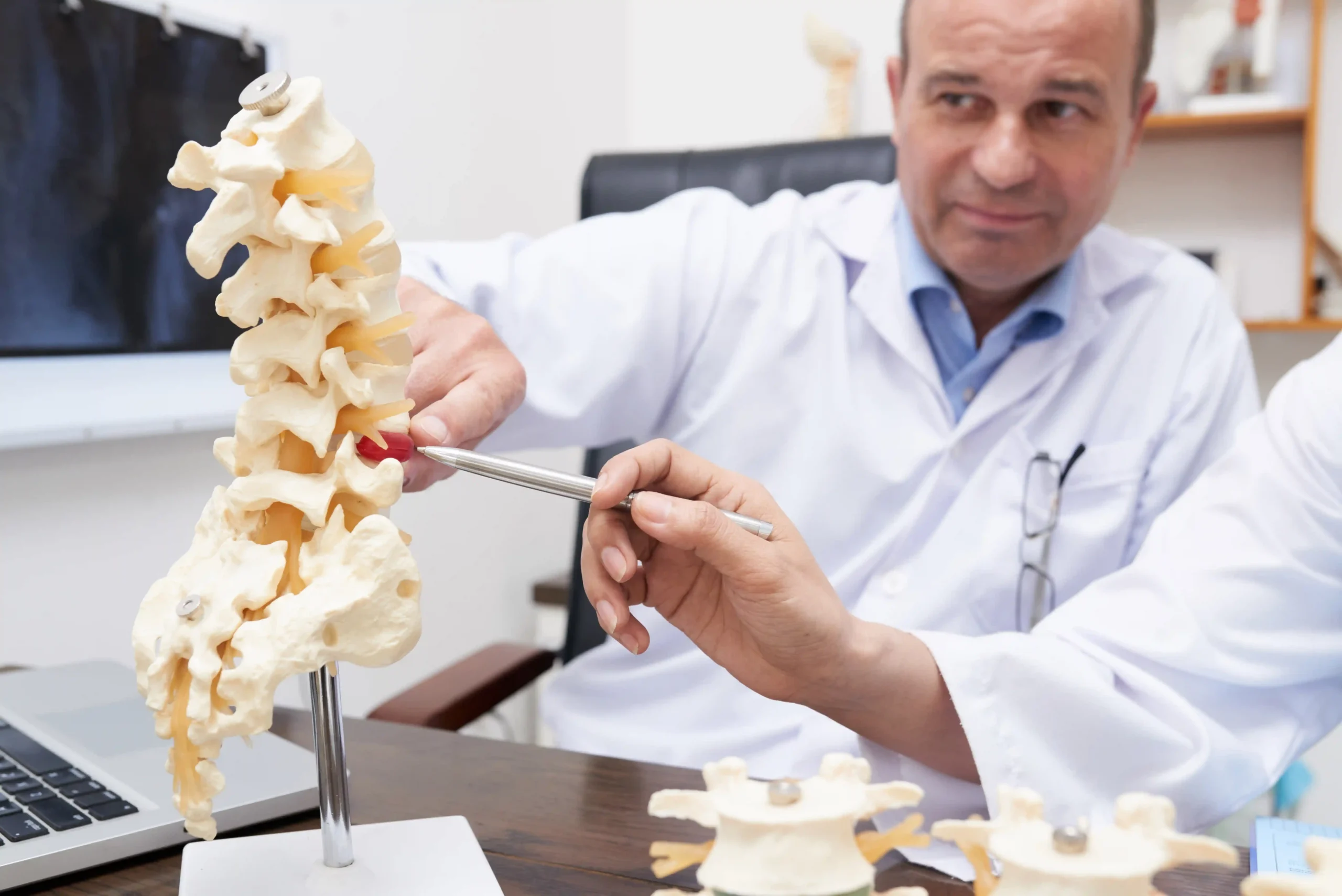
A slip disc (herniated disc) happens when the soft, gel-like centre of a spinal disc — the nucleus pulposus — pushes through a tear in its tough outer ring, the annulus fibrosus. That bulging or leaked material presses on a nearby nerve root, and that pressure is what creates your pain, numbness, or weakness, not the disc itself.
This is why the same condition can feel completely different from one person to the next — it depends entirely on which nerve is being compressed and how much.
- Most common at L4-L5 and L5-S1 in the lower back, where mechanical load is highest
- Also occurs at C5-C6 and C6-C7 in the neck, affecting the shoulder, arm, or hand
- Pain travels along the compressed nerve’s pathway — which is why leg or arm pain often feels worse than the back pain itself
The reassuring part: your body is designed to heal this. The disc material pressing on the nerve can shrink and gradually be reabsorbed over time, which is exactly why most cases improve without surgery.
Can a Slip Disc Be Cured Permanently? The Real Answer
Yes, in most cases — 80-90% of slip discs improve significantly with conservative treatment within 6-12 weeks, and a large majority of patients return to full, pain-free activity long-term.
But it’s worth being accurate about what “permanently cured” actually means here. It usually means your symptoms fully resolve and don’t return with proper spine care — not that your disc magically returns to its original, undamaged shape. Once that distinction is clear, the right treatment path and the right expectations both become much easier to set.
- Mild to moderate herniations often heal completely with non-surgical care alone
- Severe herniations with ongoing nerve compression may need surgery to prevent permanent damage
- Long-term “cure” depends heavily on your post-recovery habits — posture, core strength, and weight — not just the initial treatment
Non-Surgical vs Surgical Treatment: Which Path Fits Your Case?
The majority of patients never need surgery at all. Treatment almost always starts conservatively, and surgery is reserved for a much smaller group with specific red-flag symptoms.
Non-Surgical Treatment (First-Line for Most Patients)
- Targeted physiotherapy — McKenzie method, nerve mobilisation, core stabilisation
- NSAIDs and muscle relaxants to reduce inflammation and spasm
- steroid injections for severe pain that’s blocking physiotherapy progress
- Activity modification — adjusting movement patterns that load the disc
Surgical Treatment (When Conservative Care Isn’t Enough)
- Microdiscectomy — the gold-standard lumbar surgery; removes the disc fragment pressing on the nerve through a small incision; 90-95% success rate
- Endoscopic discectomy — the most minimally invasive option, with same-day mobilisation
- ACDF (Anterior Cervical Discectomy and Fusion) — for cervical discs causing significant arm symptoms
- Laminectomy — used when herniation is combined with spinal stenosis
When Does a Slip Disc Actually Require Surgery?
Surgery isn’t always a first option — it’s considered only when specific red flags appear, and even then, it’s usually after a genuine trial of conservative care.
- No meaningful improvement after 12 weeks of consistent, structured conservative treatment
- Progressive weakness, foot drop, or worsening grip strength in the hand
- Numbness or tingling that keeps spreading rather than settling
- Loss of bladder or bowel control alongside back pain — a medical emergency known as Cauda Equina Syndrome
If none of these applies to you, conservative treatment deserves a full and honest trial before surgery is even discussed.
What Determines How Fast — and How Fully — You Recover?
Recovery speed isn’t identical for everyone, and two people with the same MRI report can heal at very different rates. Several factors quietly decide how fast — and how completely — your slip disc heals.
- Age and disc hydration — younger, well-hydrated discs tend to heal faster than older, drier ones
- Severity and disc level — lumbar herniations generally heal faster than cervical ones
- Consistency with physiotherapy — patients who follow through daily recover noticeably faster than those who attend sporadically
- Body weight and posture habits — excess weight and poor sitting posture both increase ongoing disc pressure
- Smoking — reduces blood flow to the disc and measurably slows healing
Slip Disc Recovery Timeline: What to Expect Week by Week
| Recovery Stage | What Typically Happens |
| Week 1-2 | Acute pain and inflammation; rest, medication, and gentle movement |
| Week 2-6 | Pain begins to reduce; structured physiotherapy starts |
| Week 6-12 | Significant improvement in most conservative-care cases |
| 3-6 Months | Near-complete recovery; gradual return to normal activity and exercise |
| Beyond 6 Months | Surgery is considered only if there’s been no meaningful improvement noticed |
How to Tell You’re Actually Healing
It helps to know what genuine progress looks like, rather than judging recovery day by day based on pain alone.
- Pain “centralising” — moving from the leg or arm back toward the spine, a well-documented sign of healing
- Numbness and tingling are gradually fading instead of spreading
- Improved ability to sit, stand, or sleep without sharp, shooting pain
- Reduced reliance on pain medication over successive weeks
5 Proven Ways to Heal a Slip Disc for the Long Term
- Targeted physiotherapy — McKenzie exercises and core stabilisation, guided by a qualified professional rather than generic online routines
- Daily walking — gentle, low-impact movement keeps the disc nourished and prevents the stiffness that comes from inactivity
- Core strengthening — planks, bridges, and dead bugs build the deep muscles that act as the spine’s natural support system
- Posture correction — proper lumbar support while sitting, and keeping screens at eye level, reduces ongoing disc pressure
- Gradual return to activity — avoiding both complete bed rest and heavy strain accelerates genuine, lasting healing
Mistakes That Quietly Slow Down Recovery
Even patients who are doing physiotherapy correctly can slow their own healing through everyday habits that go unnoticed.
Sleep Position
- Avoid sleeping on your stomach — it arches the lower back and increases disc pressure overnight
- Sleep on your back with a pillow under the knees, or on your side with a pillow between the knees, to keep the spine neutral
Food to Eat or Avoid
- Eat: anti-inflammatory foods — leafy greens, berries, fatty fish, and nuts
- Avoid: processed sugar, fried food, and excess alcohol, all of which increase systemic inflammation and can slow tissue healing
Hydration
- Discs are largely water-based, and staying well-hydrated supports their natural cushioning ability, nutrient exchange, and healing capacity
Is Surgery-Free Recovery Really Possible?
Yes — for most patients, surgery-free recovery isn’t just possible, it’s the expected outcome. 80-90% of patients see significant improvement with physiotherapy, medication, and activity changes within 6-12 weeks, and many never need to revisit the idea of surgery at all.
Surgery becomes necessary only when conservative treatment genuinely fails to provide relief, improvement, or when red-flag symptoms like progressive weakness or Cauda Equina Syndrome appear.
Preventing a Slip Disc From Coming Back
Curing the current episode is only half the picture — staying disc-healthy long-term depends on what you do after the pain is gone.
- Keep core and back-supporting muscles strong through regular, low-impact strength work
- Maintain a healthy body weight to reduce ongoing compressive load on the lumbar spine
- Practice correct lifting technique — bend at the knees, not the back, and keep loads close to the body
- Schedule periodic check-ins with a spine specialist if you’ve had a herniation before, even after symptoms resolve
Frequently Asked Questions
1. Can L4 and L5 be cured permanently?
Yes — L4-L5 herniations, the most common type, respond very well to conservative treatment in most cases. Surgery is only needed if nerve compression is severe or progressive.
2. Is a slip disc a permanent problem?
Not usually. With timely treatment and lasting lifestyle changes, most people recover fully and stay pain-free long-term.
3. What is the fastest way to heal a slipped disc?
A combination of targeted physiotherapy, anti-inflammatory medication, and gentle daily walking produces the fastest results. Avoiding bed rest and heavy lifting matters just as much as active treatment.
4. What are the first signs of a slipped disc?
Early signs include localised back or neck pain, followed by pain radiating into an arm or leg, along with numbness, tingling, or muscle weakness.
5. How long will a slipped disc last?
Most cases improve within 6-12 weeks with proper conservative treatment. Severe cases needing surgery typically see full recovery within 3-6 months.
Final Thoughts
A slip disc can feel alarming, especially in the first few weeks, but for the vast majority of patients, it’s a treatable, healing condition — not a permanent sentence. With the right physiotherapy, sensible activity changes, and patience through the timeline, most people return to a fully active, pain-free life, and stay that way with consistent core and posture habits.
For patients seeking expert, personalised care, Dr. Amit Shridhar — Best Spine Surgeon in Delhi — offers accurate diagnosis and complete slip disc management, from non-surgical rehabilitation programmes through to advanced minimally invasive surgery when it’s truly needed.