Back pain is one of the most common health complaints, but not every case of back pain is caused by a slipped disc. A slipped disc occurs when a spinal disc bulges or ruptures and presses on nearby nerves.
This nerve compression can cause pain that extends beyond the spine, affecting areas such as the buttocks, legs, neck, shoulders, arms, or hands, depending on the location of the affected or damaged disc.
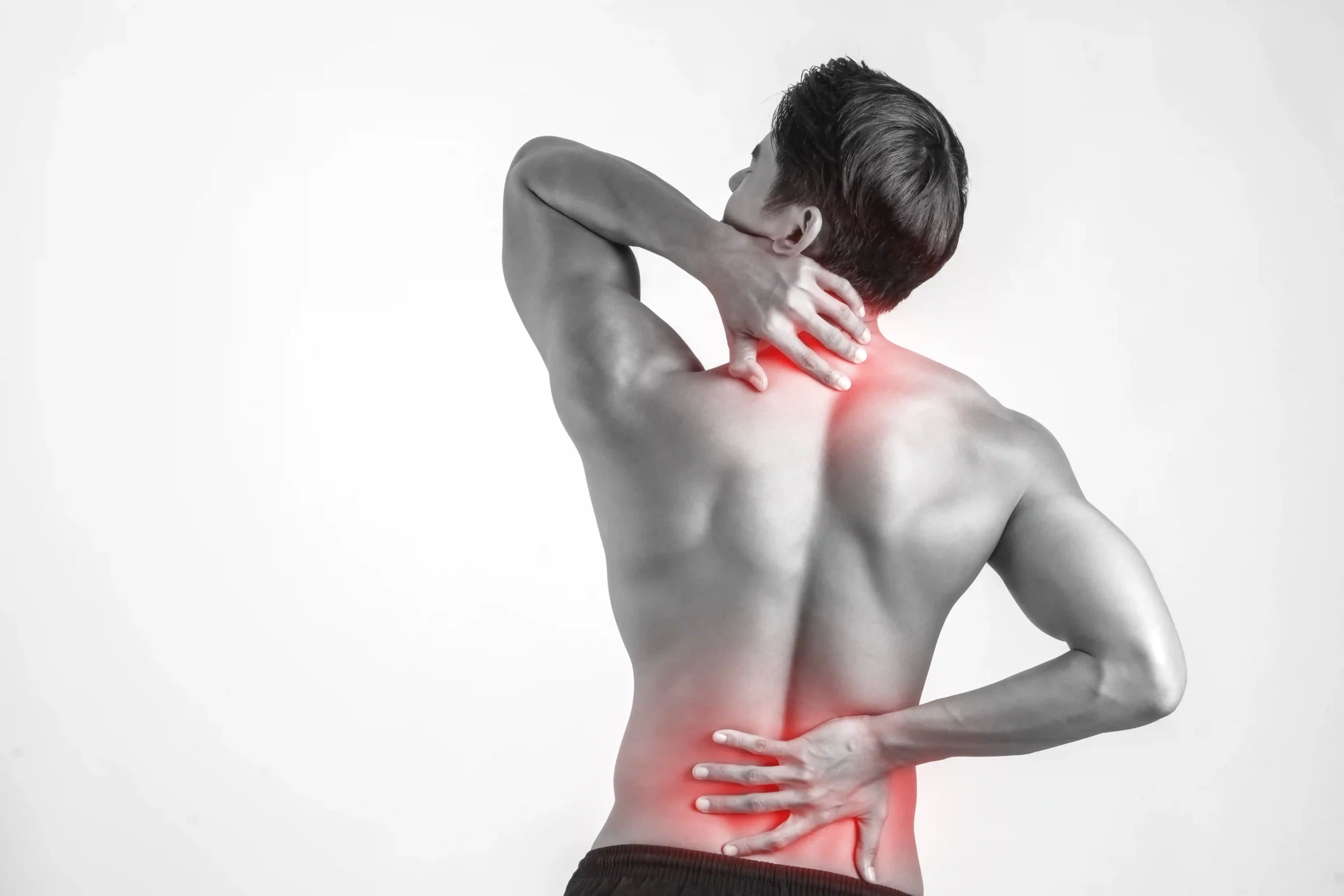
Understanding the Slip Disc Pain Area can help you identify the warning signs early, seek timely medical attention, and prevent symptoms from becoming more severe.
Table of Contents
Understanding Slip Disc and Its Pain
A slipped disc — also called a herniated or prolapsed disc — happens when the soft inner material of a spinal disc pushes through a tear in its outer ring. It commonly occurs in the lower back and neck, and the pain it causes comes not from the disc itself, but from the nerve it compresses — sending pain signals along the entire nerve pathway.
This is why the slip disc pain area matters so much. Where your pain appears tells both you and your doctor which disc is affected, which nerve is compressed, and what treatment is most appropriate.
Is Your Back Pain a Slipped Disc?
Not all back pain is a slipped disc — but certain characteristics make it much more likely:
- Pain that radiates from the spine into the arms or legs
- Numbness, tingling, or burning sensations in specific areas
- Muscle weakness in one arm or one leg
- Pain that worsens with sitting, bending, or coughing
- Pain that travels down one specific pathway — not general widespread discomfort
If your pain fits these patterns, a slipped disc affecting a specific nerve root is a likely explanation — and the location of your pain can help identify exactly which one.
Top 5 Slip Disc Pain Areas — Where a Slipped Disc Hurts the Most
Pain Area 1 — Lower Back (Lumbar Region — L4-L5 and L5-S1)
The lower back accounts for approximately 90% of all slipped disc cases — the L4-L5 and L5-S1 levels carry the most of the load in the spine, making them the most vulnerable to herniation.
Why It Hurts Here
- Lumbar discs absorb the full weight of the upper body during every movement, making them the most mechanically stressed discs in the body
- The posterior ligament is narrower here, providing less resistance to disc bulging
How the Pain Feels
- Deep, aching lower back pain that worsens with sitting, bending, or lifting
- Pain that increases with coughing or sneezing
Pain Area 2 — Buttock and Hip (Piriformis Region)
Buttock and hip pain is the second most common slip disc pain area, caused by nerve root compression at L4-L5 or L5-S1, irritating the pathways running through the buttock.
Why It Hurts Here
- The sciatic nerve exits the spine at the lower lumbar levels and passes directly through the buttock before travelling down the leg
- Compression of the L5 or S1 nerve root immediately sends pain along this pathway
How the Pain Feels
- A deep ache in one buttock, often described as a severe cramp
- Sensitivity when pressing on the buttock, worsening with prolonged sitting
Pain Area 3 — Leg and Foot (Sciatic Nerve Pathway)
Leg and foot pain — commonly called sciatica — travels from the lower back through the buttock, down the thigh, and into the calf and foot.
Why It Hurts Here
- Compression of the L4, L5, or S1 nerve root sends pain along the entire nerve pathway — producing symptoms at the knee, calf, ankle, and foot
- The further down the leg the pain travels, the more significant the nerve compression is likely to be
How the Pain Feels
- Shooting, burning, or electric pain down one leg
- Numbness or tingling in the calf, foot, or specific toes
When It Becomes Serious
- Foot drop — inability to lift the front of the foot — indicates significant L5 nerve compression
- Any bladder or bowel changes alongside leg pain require emergency evaluation — this may indicate Cauda Equina Syndrome
Pain Area 4 — Neck (Cervical Region — C5-C6 and C6-C7)
Cervical disc herniations — most commonly at C5-C6 and C6-C7 — produce neck pain that can also radiate into the shoulder, arm, and hand.
Why It Hurts Here
- The cervical spine supports the full weight of the head and allows a wide range of movement, both increasing disc stress
- C5-C6 and C6-C7 are the most mobile and most commonly herniated cervical levels
How the Pain Feels
- Neck pain and stiffness are worse when looking down or turning to one side
- Headaches starting at the base of the skull
Warning Signs
- Shooting pain from the neck down one arm — cervical radiculopathy
- Weakness in grip or hand muscles indicates C6 or C7 nerve compression
Pain Area 5 — Shoulder, Arm, and Hand
Shoulder, arm, and hand pain from a cervical slipped disc is one of the most frequently misdiagnosed pain areas — patients are often treated for shoulder problems or carpal tunnel syndrome before the true cause is identified.
Why It Hurts Here
- Nerve roots at C5, C6, and C7 directly supply sensation and movement to the shoulder, forearm, and fingers
- Disc compression at these levels sends pain exactly along that nerve’s distribution — with no local cause in the arm itself
How the Pain Feels
- C5 compression affects the outer shoulder and upper arm; C6 affects the thumb and index finger; C7 affects the middle finger
Key Diagnostic Clue
- If neck movement makes arm or hand symptoms worse, a cervical disc herniation is highly likely and needs imaging to confirm
Why Does a Slipped Disc Hurt the Most in These Areas?
Yes — approximately 80–90% of slipped discs can improve significantly within 6–12 weeks of structured conservative treatment, without surgery. The herniated disc material can gradually be reabsorbed by the body, reducing nerve compression naturally.
Targeted physiotherapy (McKenzie Method, core stabilisation), anti-inflammatory medication, activity modification, and gentle walking are the most effective approaches. Complete bed rest and heavy lifting are counterproductive — they increase disc pressure and slow recovery.
How to Prevent Slip Disc From Hurting These Pain Areas
Prevention is far more effective and better than treatment. These daily habits significantly reduce the risk of a slipped disc developing or worsening:
- Maintain good posture — particularly during prolonged sitting. Use a chair with good lumbar support and keep the screen at eye level
- Take regular movement breaks — get up and walk for 2-3 minutes every 30-40 minutes during desk work to reduce sustained disc pressure
- Strengthen the core — deep core muscles are the spine’s natural support system. Regular planks, bridges, and dead bugs reduce disc stress significantly
- Lift correctly — bend at the knees, not the back. Keep the object close to the body and avoid twisting while lifting
- Maintain a healthy weight — excess body weight significantly increases compressive load on lumbar discs
- Sleep on a medium-firm mattress — very soft mattresses fail to support the lumbar curve during sleep, increasing disc stress overnight
Can You Heal a Slipped Disc Naturally?
Yes — and the majority of slipped discs do improve without surgery when managed correctly.
Approximately 80-90% of slipped disc cases — particularly lumbar herniations — resolve significantly within 6-12 weeks of structured conservative treatment. The herniated disc material can gradually be reabsorbed by the body over time — a process that reduces nerve compression and resolves pain naturally.
What helps natural healing:
- Targeted physiotherapy — McKenzie Method, neural mobilisation, and core stabilisation
- Anti-inflammatory medications — reducing the inflammation around the compressed nerve root
- Activity modification — avoiding the positions and movements that increase disc pressure
- Epidural steroid injections — when pain is severe, these create a window for physiotherapy to work effectively
- Gentle walking — one of the safest and most effective activities for lumbar disc recovery
What does not help:
- Complete bed rest — counterproductive; bed rest worsens deconditioning and slows recovery
- Heavy lifting, bending and twisting, and prolonged sitting — all increase disc pressure and delay healing
Slip Disc Treatment Options
When natural healing and self-management are not producing adequate improvement, a range of treatment options are available:
Conservative (Non-Surgical):
- Physiotherapy — targeted nerve decompression and core strengthening
- Medication — NSAIDs, muscle relaxants, and neuropathic agents
- Epidural steroid injections — direct anti-inflammatory delivery to the affected nerve root
- Activity modification and postural correction
Surgical (When Required):
- Microdiscectomy — gold standard surgery for lumbar disc herniation; removes the disc fragment pressing on the nerve through a 15-20mm incision. Success rate: 90-95%
- Endoscopic disc surgery — the most minimally invasive approach; 7-8mm incision with same-day mobilisation
- Anterior Cervical Discectomy and Fusion (ACDF) — for cervical disc herniations causing significant arm symptoms or myelopathy
- Laminectomy — for disc herniations associated with spinal stenosis
Surgery is only considered when conservative treatment fails after 12 weeks, when neurological deficit is progressive, or when Cauda Equina Syndrome is present (emergency).
When to See a Doctor for Slip Disc Pain
Most slip disc pain can be initially managed with rest, gentle activity, and over-the-counter anti-inflammatories. But these symptoms require prompt specialist evaluation:
See a spine specialist when:
- Leg or arm pain is getting progressively worse — not improving — after 4-6 weeks
- You develop foot drop, grip weakness, or difficulty with fine hand movements
- Pain is severe enough to prevent normal daily function or sleep
- Numbness or tingling is spreading to new areas
Seek emergency evaluation immediately if:
- Bladder or bowel control changes alongside back or neck pain — possible Cauda Equina Syndrome
- Both legs are affected simultaneously
- Symptoms developed after significant trauma — fall, accident, or sports injury
Frequently Asked Questions
1. Can a slip disc be cured without surgery?
Yes — 80–90% of cases resolve with physiotherapy, anti-inflammatory medication, and activity modification within 6–12 weeks. Surgery is only needed for progressive nerve damage or failed conservative treatment.
2. How do I know if I have a slipped disc?
Key signs are pain radiating from the spine into an arm or leg, numbness or tingling, muscle weakness, and pain worsening with sitting or bending. An MRI confirms the diagnosis.
3. Is bed rest good for a slipped disc?
Brief rest for 1–2 days is acceptable during severe pain, but prolonged bed rest worsens recovery. Gentle walking and physiotherapy consistently produce better outcomes.
4. How do you recover from a slipped disc fast?
Targeted physiotherapy, anti-inflammatory medication, and avoiding disc-loading positions produce the fastest recovery. Epidural steroid injections can help when pain is severe enough to prevent physiotherapy.
5. What can be mistaken for a slipped disc?
Piriformis syndrome, spinal stenosis, facet joint arthritis, and peripheral neuropathy are commonly confused with a slipped disc. Cervical disc herniation is frequently misdiagnosed as a shoulder or carpal tunnel problem. MRI and specialist evaluation confirm the true cause.
Conclusion
A slipped disc can produce pain in multiple areas — the lower back, buttock, leg, neck, shoulder, arm, and hand — depending on which disc is affected and which nerve it compresses. Understanding your specific slip disc pain area is the first step toward getting the right diagnosis and the most appropriate treatment.
Dr. Amit Shridhar — Best Spine Surgeon in Delhi — specialises in the accurate diagnosis and complete management of slipped discs at every level of the spine — from targeted non-surgical programmes through to advanced minimally invasive surgery when it is genuinely needed.